
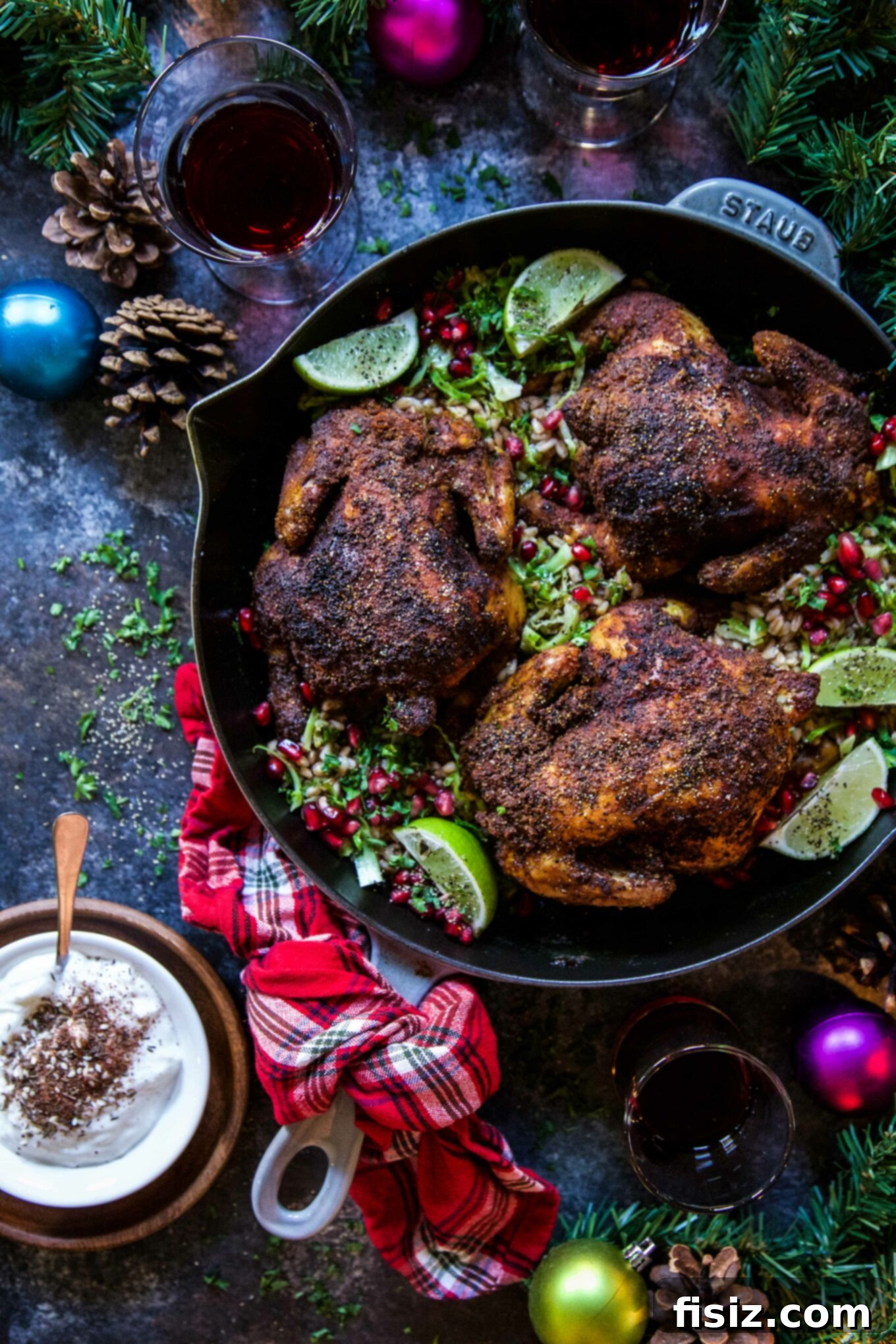
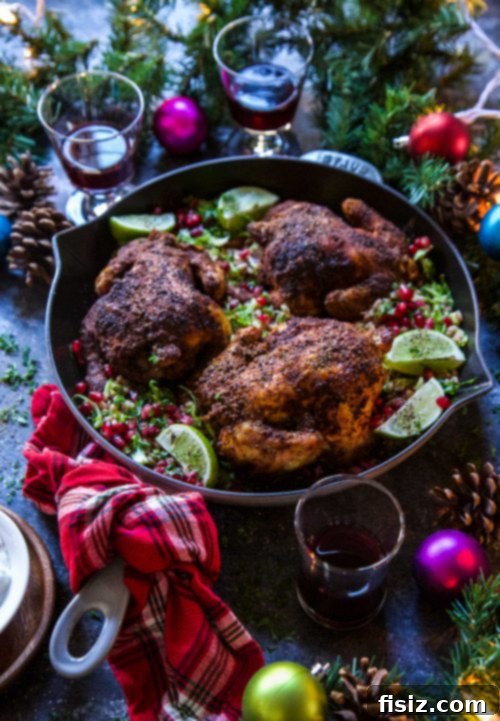
Persian-Style Baked Cornish Hens are an exquisite, yet remarkably easy meal to serve at any festive gathering or holiday dinner!
As the holiday season draws near, the quest for a show-stopping yet simple centerpiece for your dinner table begins. Look no further than these glorious Persian-Style Baked Cornish Hens. Forget the stress of elaborate preparations; this recipe brings together the vibrant, aromatic flavors of Persian cuisine with the convenience of individual serving sizes, making it an ideal choice for any celebratory occasion, from a cozy family dinner to a grand holiday feast. These hens promise a culinary experience that is both sophisticated and deeply comforting, ensuring your guests are impressed by both taste and presentation.
The beauty of Cornish hens lies in their petite size, offering a personalized and elegant serving that larger poultry often can’t match. Each guest receives their own perfectly cooked, succulent bird, bathed in a rich, tangy, and subtly sweet pomegranate glaze and infused with a fragrant spice blend. This dish isn’t just a meal; it’s an invitation to explore the rich tapestry of Middle Eastern flavors, delivering a burst of exotic spices and a tender, juicy texture with every bite. The blend of turmeric, cumin, paprika, and garlic powder creates a deeply flavorful crust, while the pomegranate adds a signature Persian touch that elevates this dish far beyond the ordinary.
The Allure of Persian Flavors: A Culinary Journey
Persian cuisine is renowned for its harmonious balance of sweet and sour, delicate spices, and the abundant use of fresh herbs and fruits. It’s a culinary tradition that tells stories through flavor, and this Cornish hen recipe is a testament to that legacy. The inspiration for this dish stems from a deep appreciation for the rich culinary heritage of the Middle East, particularly the aromatic profiles found in Persian kitchens. Ingredients like pomegranate and a carefully curated blend of spices are fundamental to achieving that authentic taste.
Our journey into Persian flavors for these Cornish hens begins with a robust spice rub. Turmeric lends its warm, earthy notes and a beautiful golden hue, instantly signaling the exotic nature of the dish. Paprika contributes a subtle sweetness and a vibrant red color, enhancing the visual appeal of the roasted hens. Cumin provides a deep, smoky aroma, grounding the other spices, while garlic powder adds that essential pungent kick that awakens the palate. This combination is not just about heat; it’s about building layers of complex flavor that are both inviting and deeply satisfying.
But the true star of the Persian-inspired glaze is pomegranate. Pomegranate juice provides a tart base, which is then concentrated and enriched with pomegranate molasses. This thick, dark syrup is a staple in Middle Eastern cooking, offering an intense sweet-sour flavor that is utterly unique. When simmered, it transforms into a glossy, sticky glaze that perfectly coats the hens, caramelizing beautifully in the oven and locking in moisture while imparting an irresistible tang and sweetness. The result is a vibrant, flavorful hen that captures the essence of Persian hospitality and culinary artistry.
Crafting Your Culinary Masterpiece: Step-by-Step Excellence
Preparing these Persian-Style Baked Cornish Hens is surprisingly straightforward, allowing you to achieve gourmet results with minimal effort. The key lies in the quality of ingredients and a simple, yet effective cooking technique. Each step is designed to maximize flavor and ensure your hens are perfectly cooked, with crispy skin and tender, juicy meat. Let’s walk through the process to create this unforgettable dish.
Selecting and Preparing Your Hens
Start with three one-pound Cornish hens. These are readily available in most grocery stores and are perfect for individual servings. Before seasoning, it’s crucial to rinse the hens thoroughly under cold water and then pat them completely dry with paper towels. Removing excess moisture from the skin is vital for achieving that desirable crispy texture during roasting. A dry surface allows the spice rub to adhere better and promotes browning, which is essential for flavor development.
The Aromatic Spice Rub
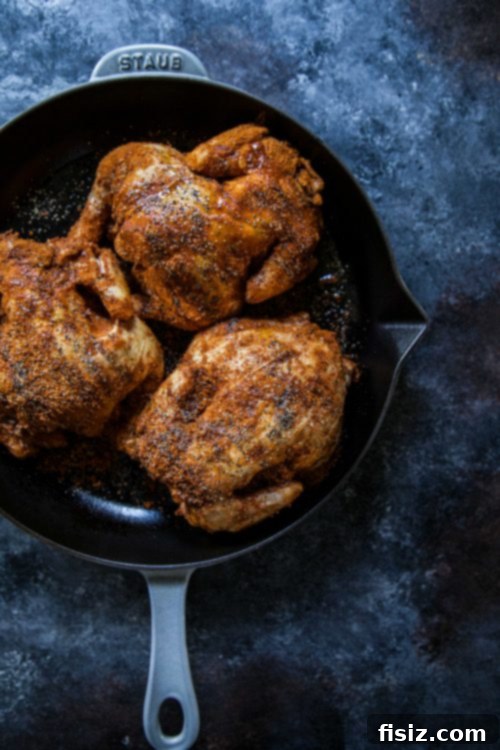
In a small bowl, combine the ground turmeric, ground cumin, ground paprika, garlic powder, and a generous pinch of salt and black pepper. This blend forms the foundation of our Persian flavor profile. Once mixed, generously rub this fragrant spice mixture all over each Cornish hen. Don’t forget to get into the crevices and even under the skin where possible to ensure every part of the bird absorbs these incredible flavors. Drizzle each hen with about one tablespoon of olive oil before rubbing, which helps the spices adhere and promotes even browning.
Initial Roasting for Flavor and Tenderness
Preheat your oven to a moderate 350 degrees Fahrenheit (175 degrees Celsius). This temperature allows the hens to cook through gently while developing a beautiful crust. Arrange the seasoned Cornish hens in a large 12-inch cast iron skillet or a sturdy roasting pan. Pour a quarter cup of chicken stock into the bottom of the skillet. This helps to keep the hens moist and creates a flavorful pan juice that will meld with the pomegranate glaze later. Place the skillet into the preheated oven and roast for approximately 40 minutes. During this initial phase, the hens will begin to cook through, and the skin will start to crisp up, locking in their natural juices.
The Irresistible Pomegranate Glaze
While the hens are undergoing their first roast, prepare the star of the show: the pomegranate glaze. In a small saucepan, combine two cups of pomegranate juice, half a cup of pomegranate molasses, and an additional teaspoon of ground cumin. Bring this mixture to a boil over medium heat, stirring continuously to ensure all ingredients are well combined. Once boiling, reduce the heat to medium-low and allow the glaze to simmer gently for about 15 to 20 minutes. The goal is for the sauce to reduce and thicken slightly, transforming into a rich, syrupy glaze that will cling beautifully to the hens.
The Final Glaze and Roast
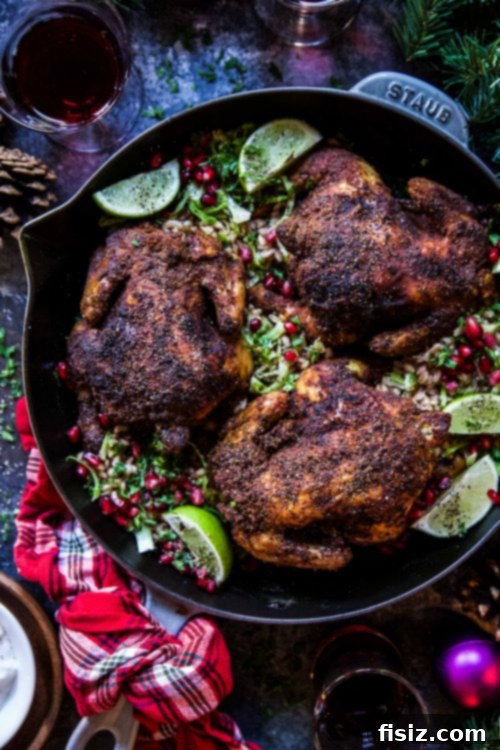
After the initial 40 minutes, carefully remove the hens from the oven. Now comes the moment to lavish them with the prepared pomegranate sauce. Generously pour the thickened glaze over each hen, ensuring an even coating. The vibrant crimson color of the glaze adds to the visual appeal and hints at the tantalizing flavors to come. Return the skillet to the oven for another 20 minutes. During this final roasting period, the glaze will caramelize, forming a sticky, flavorful crust, and the hens will finish cooking. Use a meat thermometer to ensure the internal temperature of the thickest part of the hen reaches 160 degrees Fahrenheit (71 degrees Celsius).
Recipe: Persian-Style Baked Cornish Hens
Persian-Style Baked Cornish Hens
Pin Recipe
Leave a Review »
Ingredients
- 2 tbsp ground turmeric
- 1 tbsp + 1 tsp ground cumin, divided
- 1 tbsp ground paprika
- 1 tbsp garlic powder
- 3 one pound Cornish hens, rinsed, patted dry
- 3 tbsp olive oil
- ¼ cup chicken stock
- 2 cups pomegranate juice
- ½ cup pomegranate molasses
- Cooked farro, for serving
- Pomegranate arils, for garnish
- Salt and pepper to taste
Instructions
-
Preheat an oven to 350 degrees F (175 C).
-
In a small bowl combine turmeric, 1 tbsp cumin, paprika, garlic powder, salt and pepper.
-
Place the Cornish hens into a large 12-inch cast iron skillet and drizzle each hen with 1 tbsp of olive oil.
-
Next, take the turmeric spice mixture and rub all over each bird until well covered. Pour the chicken stock into the bottom of the cast-iron skillet. Place the cast-iron skillet into the oven and roast for about 40 minutes.
-
Meanwhile, in a small saucepan bring the pomegranate juice, pomegranate molasses, and 1 tsp ground cumin to a boil. Stir to combine and then reduce the heat to medium-low to simmer for about 15 to 20 minutes until slightly thickened.
-
Remove the hens from the oven, and then pour the pomegranate sauce over each hen. Place the skillet back into the oven for another 20 minutes or until the internal temperature of the hen reaches 160 degrees F (71 C).
-
Serve the hens with farro and pomegranate arils for garnish.
Serving Suggestions and Perfect Pairings
Once your Persian-Style Baked Cornish Hens emerge from the oven, glistening with their pomegranate glaze, they are ready to grace your table. While they are a feast for the eyes on their own, thoughtful accompaniments can elevate the entire dining experience. A classic pairing, as suggested in the recipe, is cooked farro. This ancient grain offers a delightful chewy texture and a nutty flavor that complements the rich hens beautifully. Its subtle earthiness provides a perfect counterpoint to the sweet and tangy glaze.
For an added touch of elegance and a burst of freshness, garnish the hens generously with fresh pomegranate arils. These jewel-like seeds not only add a pop of color but also a wonderful crunch and a tart counterpoint to the savory meat. A sprinkling of chopped fresh parsley or cilantro can further enhance the vibrant flavors and add a fresh, aromatic finish. Consider serving these hens alongside a fluffy saffron rice pilaf, a traditional Persian accompaniment that would truly complete the meal. Roasted root vegetables like carrots and parsnips, or a simple green salad with a light vinaigrette, would also make excellent additions, balancing the richness of the main dish.
For beverage pairings, consider a dry rosé wine, which can beautifully cut through the richness of the hens and complement the pomegranate notes. A light-bodied red, such as a Pinot Noir, would also be a suitable choice. For non-alcoholic options, a refreshing sparkling water infused with mint and lime, or a glass of unsweetened iced tea, would provide a delightful contrast.
Tips for Success and Variations
To ensure your Persian-Style Baked Cornish Hens turn out perfectly every time, here are a few additional tips. First, do not overcrowd your roasting pan. Give each hen enough space to allow for proper air circulation, which is essential for crispy skin. If necessary, use two pans. Second, always trust a meat thermometer. While the recipe provides approximate cooking times, ovens can vary, and reaching the correct internal temperature (160°F / 71°C for hens, allowing for carryover cooking to 165°F / 74°C) is crucial for both safety and optimal texture. Third, once the hens are out of the oven, allow them to rest for 5-10 minutes before serving. This allows the juices to redistribute, resulting in a more tender and flavorful bird.
For those looking to experiment, consider adding a squeeze of fresh orange juice or a touch of honey to the pomegranate glaze for an extra layer of complexity. A pinch of ground cardamom or cinnamon in the spice rub can also introduce another dimension of aromatic Persian flair. If you prefer a slightly spicier kick, a tiny amount of cayenne pepper can be added to the rub. You can also marinate the hens in the spice rub and olive oil for a few hours, or even overnight, in the refrigerator to deepen the flavors further before roasting.
In conclusion, our Persian-Style Baked Cornish Hens offer a fusion of exquisite flavors and tender poultry, taking your taste buds on an unforgettable culinary journey. With each succulent bite, you’ll savor the rich and aromatic essence of Persian cuisine, made accessible and elegant for your home kitchen. This delightful dish celebrates the harmony of tastes and traditions, promising a memorable meal for you and your loved ones. We encourage you to try this recipe and experience the magic of Middle Eastern flavors brought to your holiday table.