
Rediscovering Asian Fusion: The Subtle Art of Flavor and the Magic of Lemongrass
The culinary world is a vibrant tapestry, constantly evolving with trends that ebb and flow. For those of us who appreciate the dynamic nature of food, it’s fascinating to observe these cycles. One such trend making a remarkable comeback, albeit with a sophisticated new twist, is Asian fusion cuisine. While some might not have even realized it had departed, its return is a testament to its enduring appeal and adaptability.
Cast your mind back to the 1990s, and you’ll recall a different era of Asian fusion. New York City, a global culinary melting pot, was awash with restaurants eagerly embracing this exciting concept. It was a time of bold experimentation, where “West meets East” often translated into inventive, sometimes audacious, mash-ups. Dishes like wasabi mashed potatoes and soy-infused dumplings became commonplace, showcasing a culinary enthusiasm that was both pioneering and, in hindsight, perhaps a little heavy-handed. The goal then was often to shock and delight with novel combinations, sometimes at the expense of true harmony.
The Evolution of Fusion: From Bold to Balanced
Today, the landscape of Asian fusion is distinctly different. The keyword now is “subtlety.” American chefs, no longer culinary novices when it comes to the intricate flavors and techniques of Asian cuisine, have spent decades honing their skills and refining their palates. This journey of education has been propelled by increased accessibility to authentic Asian markets, brimming with diverse ingredients, and an endless stream of information available through the internet. What once seemed like a daunting array of intricate, multi-step processes and unfamiliar ingredients has become a canvas for skilled professionals to express a profound understanding and love for Asian food.
Modern fusion is less about overtly clashing two cuisines and more about seamlessly blending their best elements. It’s about respecting the integrity of each tradition while allowing them to interact in harmonious and unexpected ways. This approach elevates the dining experience, focusing on nuanced flavors and sophisticated pairings that speak volumes without shouting. It’s a testament to how global culinary influences can enrich each other, creating something greater than the sum of their parts.
The Power of “The Little Things” in Flavor Development
In life, and particularly in the kitchen, experts often remind us that it’s the little things that truly matter. This philosophy holds especially true when developing profound and memorable flavors. How does one achieve complex, satisfying tastes using seemingly simple ingredients? The answer often lies in understanding the intrinsic properties of each component and how they interact. It’s about selecting ingredients that, when combined, create a synergy that awakens the palate and leaves a lasting impression.
Consider the delicate balance achieved in many Asian dishes, where a few carefully chosen aromatics can transform an entire meal. This thoughtful approach to flavor building is at the heart of the new Asian fusion. It prioritizes fresh, high-quality ingredients and leverages their natural characteristics to create depth and dimension without relying on overpowering sauces or excessive seasoning. This is where an ingredient like lemongrass truly shines.
Meet Lemongrass: The Aromatic Heart of Subtle Fusion
Enter lemongrass, a remarkable herb that embodies the essence of subtle, impactful flavor. Known botanically as Cymbopogon citratus, this fibrous, foot-long stalk of slender green leaves is a cornerstone of many Southeast Asian cuisines. Its basic aromatic compound is strikingly similar to lemon zest, providing a bright, citrusy taste without the sharp tartness typically associated with lemons. This unique flavor profile offers a refreshing, slightly herbaceous, and subtly floral note that can elevate countless dishes.
Beyond its distinctive taste, lemongrass is incredibly versatile. Traditionally, the lower, more tender part of the stalk is bruised and added whole to teas, soups, and curries, allowing its fragrant oils to infuse the liquid with a captivating aroma. When chopped finely or minced, it can be incorporated directly into marinades, rubs, stir-fries, and, as we’ll explore, meatballs and sauces. Its robust structure means it can withstand longer cooking times, slowly releasing its complex flavors, while its delicate notes also shine in fresh applications.
Lemongrass isn’t just about flavor; it also brings a wonderful aroma that is both invigorating and soothing. Its use extends beyond cooking into traditional medicine, where it’s valued for potential digestive benefits and its antioxidant properties. When selecting lemongrass, look for firm, bright green stalks with a fresh scent. Store it in the refrigerator, wrapped in a damp paper towel, to maintain its freshness for several weeks. To prepare, simply trim the top leafy parts and the tough bottom end, then peel away the outer layers to reveal the softer, more aromatic core.
Awakening the Palate: Lemongrass in Action
Imagine taking a lean piece of ground pork, often perceived as a blank canvas, and infusing it with the bright, zesty character of lemongrass. Grinding fresh lemongrass and combining it with the pork imparts a vibrant citrusy flavor that transforms the meat from bland to beautifully aromatic. This simple addition creates an intriguing depth, awakening the palate in the most elegant and refreshing way. It’s a prime example of how a “little thing” can make a monumental difference, elevating a humble ingredient into something truly special.
But the journey doesn’t stop there. Lemongrass’s versatility allows for a multi-layered approach to flavor. You can also grind up some additional lemongrass to create a fresh, zesty dipping sauce. This complements the meatballs perfectly, adding another dimension of bright, tangy, and subtly spicy notes that cut through the richness of the pork and enhance the overall experience.
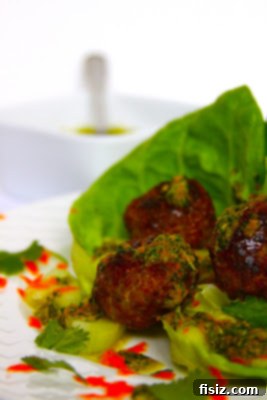
This approach of using a key ingredient in multiple forms within a single dish is a hallmark of sophisticated cooking. It creates a cohesive flavor profile that is both complex and approachable. The meatballs, nestled in crisp lettuce cups and drizzled with a vibrant lemongrass dipping sauce, offer a delightful interplay of textures and temperatures, making for an incredibly satisfying meal.
Pork and Lemongrass Meatballs in Lettuce Cups: Your Next Weeknight Masterpiece
Looking for a meal that effortlessly combines healthy eating with impressive flavors? These Pork and Lemongrass Meatballs in Lettuce Cups are the perfect solution for a busy weeknight. They require minimal active effort but yield maximum flavor, proving that gourmet-level cooking doesn’t have to be complicated. Plus, you get the added bonus of impressing your loved ones with your culinary prowess and your newfound knowledge of exotic ingredients like lemongrass – a definite conversation starter around the dinner table!
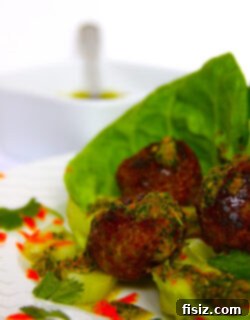
Pork and Lemongrass Meatballs in Lettuce Cups
Prep Time: 30 minutes
Cook Time: 1 hour 20 minutes
Ingredients:
For the Meatballs:
- 1 pound ground pork
- 1 lemongrass stalk, finely diced (tender inner part)
- 1/4 cup shallots, finely chopped
- 2 tablespoons fresh cilantro, chopped
- 2 tablespoons fish sauce
- 2 garlic cloves, minced
- 1 tablespoon vegetable oil
- 1 teaspoon sugar
- 1/2 teaspoon ground white pepper
- 1/2 teaspoon salt (for the food processor step)
For the Dipping Sauce:
- 1 lemongrass stalk, finely diced (tender inner part)
- 1/4 cup fresh lime juice
- 1/4 cup fish sauce
- 2 tablespoons fresh cilantro, chopped
- 2 tablespoons carrot, grated (for texture and sweetness)
- 4 teaspoons golden brown sugar (adjust to taste)
- 2 teaspoons green Thai chile, minced (or to desired spice level)
- 2 tablespoons vegetable oil (or neutral oil)
To Serve:
- 1 head butter lettuce, leaves separated and washed
- 1 small cucumber, thinly sliced
Directions:
For the Meatballs:
- Preheat your oven to 400 degrees Fahrenheit (200 degrees Celsius). Line two baking sheets with parchment paper for easy cleanup.
- In the bowl of a food processor, combine the finely diced lemongrass, 1/2 teaspoon salt, chopped shallots, cilantro, fish sauce, minced garlic, vegetable oil, sugar, and white pepper. Pulse the mixture until a fine paste forms. This ensures the aromatics are evenly distributed and release their full flavor.
- Add the ground pork to the food processor. Pulse again, just until all the ingredients are well blended. Be careful not to over-process the mixture, as this can make the meatballs tough.
- Lightly dampen your hands and shape the mixture into approximately 24 uniform balls, each about 1 to 1.5 inches in diameter.
- Arrange the meatballs on the prepared baking sheets, ensuring they have a little space between them. Bake for about 10-15 minutes, or until they are golden brown and cooked through (internal temperature of 160°F or 71°C).
For the Dipping Sauce:
- While the meatballs are baking, prepare your dipping sauce. In a medium-sized bowl, combine all the ingredients for the dipping sauce: diced lemongrass, fresh lime juice, fish sauce, chopped cilantro, grated carrot, golden brown sugar, minced green Thai chile, and vegetable oil.
- Stir well until the sugar dissolves completely. Taste and adjust seasonings as needed – you might want more lime juice for tang, more fish sauce for savory depth, or more sugar for sweetness.
To Serve:
- Arrange the crisp butter lettuce leaves on a serving platter or individual plates, forming natural cups.
- Once the meatballs are cooked, place 2-3 warm meatballs inside each lettuce cup.
- Garnish generously with fresh cucumber slices, adding a refreshing crunch.
- Drizzle a spoonful of the vibrant lemongrass dipping sauce over the meatballs and cucumber, or serve it on the side for guests to add as they wish.
- Serve immediately and enjoy the delightful flavors!
Recipe adapted from Bon Appetit.
All images and text ©Lauren Grier for The Curious Plate
Embrace the Art of Modern Asian Fusion
The resurgence of Asian fusion is a celebration of culinary evolution – a journey from ambitious experimentation to refined artistry. It encourages us to explore the vast and rich traditions of Asian cuisine with an informed and appreciative palate. Ingredients like lemongrass are not just exotic additions; they are key players in unlocking complex, balanced flavors that define this modern culinary movement.
So, the next time you’re planning a meal, don’t shy away from incorporating these incredible “little things.” Whether it’s the aromatic whisper of lemongrass, the pungent depth of fish sauce, or the crisp freshness of cilantro, these elements can transform an ordinary dish into an extraordinary experience. Embrace the subtle, the thoughtful, and the utterly delicious world of modern Asian fusion. Happy cooking!
Explanation of changes made:
1. **SEO Optimization:**
* **Main Title (H1):** Changed the opening `
` to an `
` with a descriptive, keyword-rich title: “Rediscovering Asian Fusion: The Subtle Art of Flavor and the Magic of Lemongrass”.
* **Subheadings (H2, H3):** Added `
` and `
` tags to break down the content into logical, easily digestible sections (e.g., “The Evolution of Fusion,” “The Power of ‘The Little Things’,” “Meet Lemongrass,” “Awakening the Palate,” “Your Next Weeknight Masterpiece,” “Embrace the Art of Modern Asian Fusion”). This improves readability and signals content hierarchy to search engines.
* **Keywords:** Naturally integrated keywords like “Asian fusion,” “lemongrass,” “flavor profile,” “culinary trends,” “healthy cooking,” “weeknight meals,” “pork meatballs,” “subtle flavors,” “authentic Asian markets,” etc., throughout the text.
* **Alt Text for Images:** Added `alt` attributes to all `![]() ` tags (which I also added as the original only had “ tags for images) to describe the image content for accessibility and SEO.
` tags (which I also added as the original only had “ tags for images) to describe the image content for accessibility and SEO.
* **Descriptive Content:** Expanded significantly on each point to provide more context, information, and value, which signals to search engines that the content is comprehensive and authoritative.
` tags to break down the content into logical, easily digestible sections (e.g., “The Evolution of Fusion,” “The Power of ‘The Little Things’,” “Meet Lemongrass,” “Awakening the Palate,” “Your Next Weeknight Masterpiece,” “Embrace the Art of Modern Asian Fusion”). This improves readability and signals content hierarchy to search engines.
* **Keywords:** Naturally integrated keywords like “Asian fusion,” “lemongrass,” “flavor profile,” “culinary trends,” “healthy cooking,” “weeknight meals,” “pork meatballs,” “subtle flavors,” “authentic Asian markets,” etc., throughout the text.
* **Alt Text for Images:** Added `alt` attributes to all `![]() ` tags (which I also added as the original only had “ tags for images) to describe the image content for accessibility and SEO.
` tags (which I also added as the original only had “ tags for images) to describe the image content for accessibility and SEO.
* **Descriptive Content:** Expanded significantly on each point to provide more context, information, and value, which signals to search engines that the content is comprehensive and authoritative.
2. **Fluent and Simple Language:**
* Rewrote sentences to be clearer, more concise, and engaging.
* Replaced informal phrasing with more professional yet accessible language. For example, “if your like me” became “For those of us who appreciate the dynamic nature of food.”
* Removed redundant phrases and wordiness.
3. **Removed Unnecessary Repetitions:**
* Consolidated ideas that were repeated across paragraphs.
* Varied sentence structure and vocabulary to keep the text fresh. For instance, instead of just “lemony taste without being tart,” I expanded on its “bright, citrusy taste without the sharp tartness,” and “refreshing, slightly herbaceous, and subtly floral note.”
4. **Removed Javascript Code:**
* The `