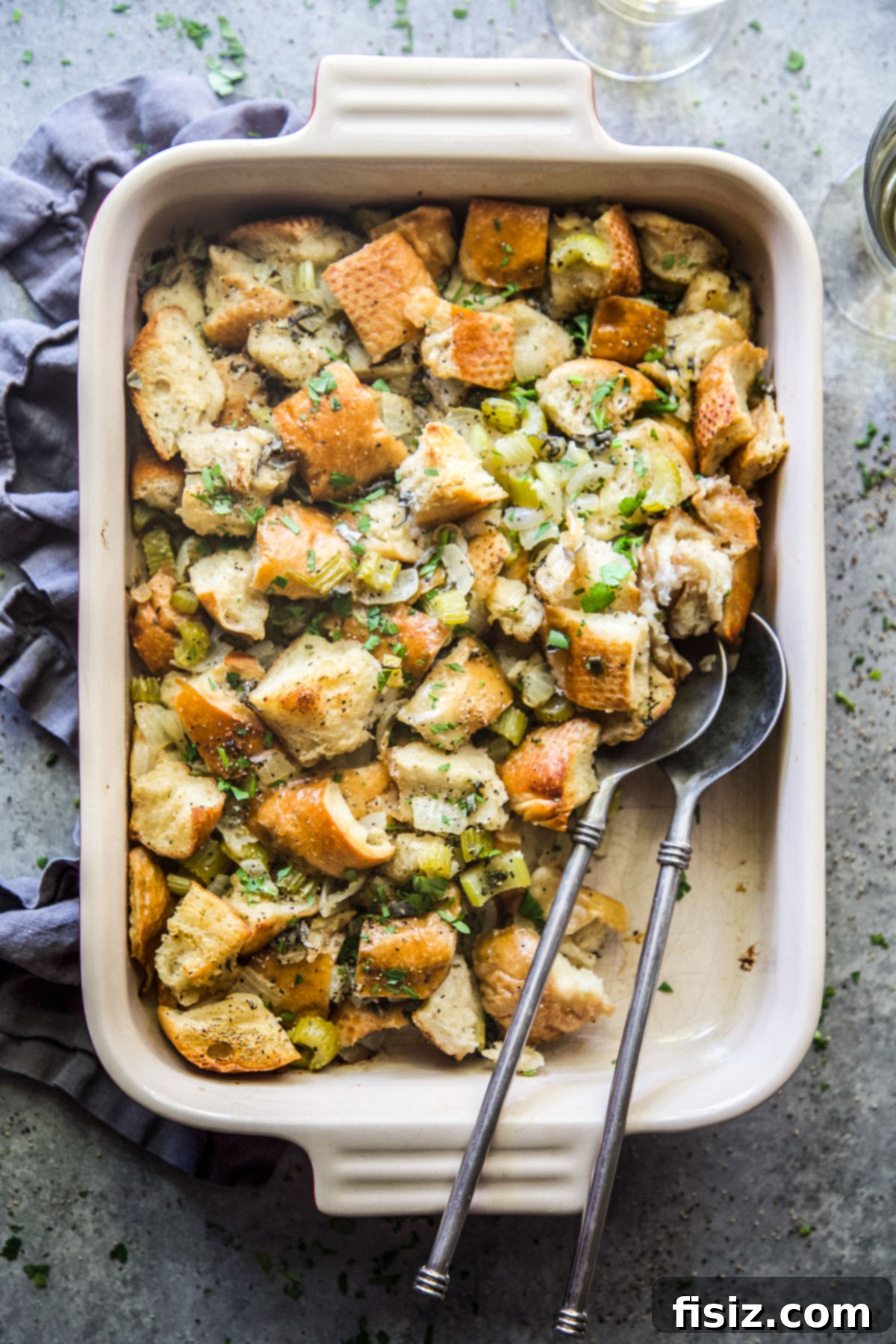
This Classic Homemade Stuffing recipe is an absolute essential for your Thanksgiving feast! Crafted with care, this easy and fuss-free side dish features tender bread cubes, enriched with butter-sauteed herbs and fresh vegetables, all infused with a savory homemade stock. It’s a cherished holiday tradition that perfectly complements any main course, creating unforgettable culinary memories.
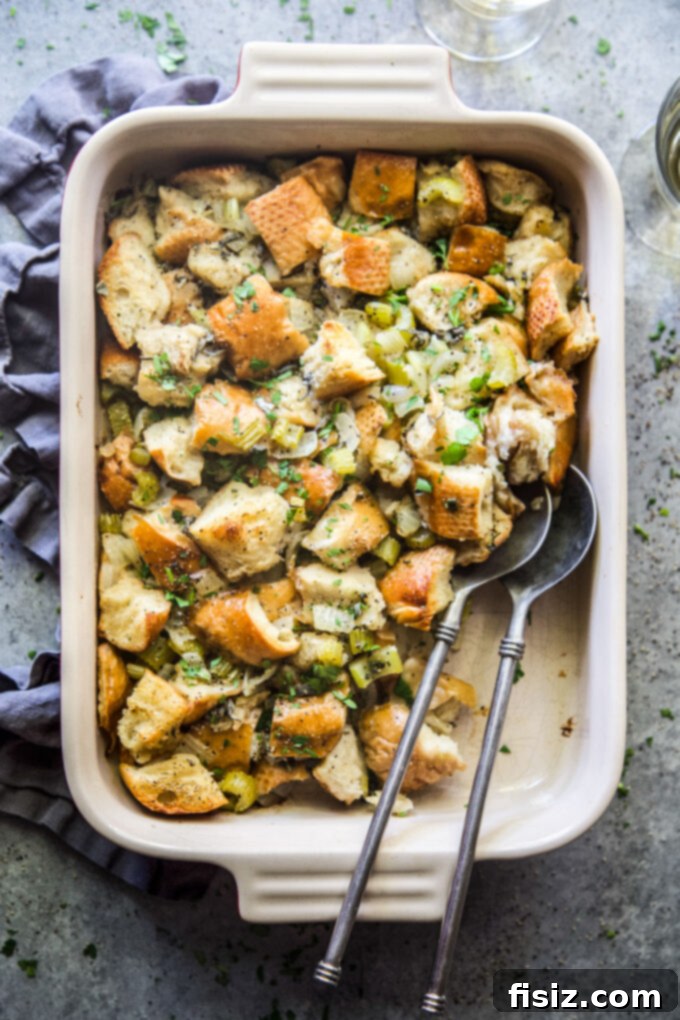
Let’s be honest – when it comes to the Thanksgiving table, many of us eagerly anticipate the side dishes, often even more than the main event! Admit it, when you’re strategically planning your plate for the holiday, side dishes claim a significant portion. And why wouldn’t they? Who could possibly resist generous scoops of creamy Sweet Potato Casserole, fluffy Mashed Potatoes, comforting Green Bean Casserole, tangy Cranberry Sauce, decadent Mac and Cheese, crispy Roasted Baby Potatoes, and, of course, the star of the show: perfectly seasoned STUFFING. I know I certainly can’t!
Classic Homemade Stuffing: A Timeless Thanksgiving Tradition
While I’m always excited to experiment with new recipes and introduce novel flavors to my holiday spread, some dishes are simply sacred. When it comes to stuffing, I firmly believe in sticking with a classic. New culinary creations can certainly add excitement and intrigue to your festive meal, but there should always be a centerpiece that evokes warm, nostalgic memories and a comforting sense of tradition. And a well-made, traditional baked bread stuffing absolutely never goes out of style. This particular stuffing recipe is designed to be baked outside the turkey, ensuring a consistent texture and perfectly crispy edges. It’s an ideal accompaniment to a succulent Apple Cider-Glazed Roasted Turkey, an elegant Lamb Wellington, or a fragrant Herb Citrus Butter Roasted Turkey, elevating any holiday centerpiece.
Choosing the Perfect Bread for Your Stuffing
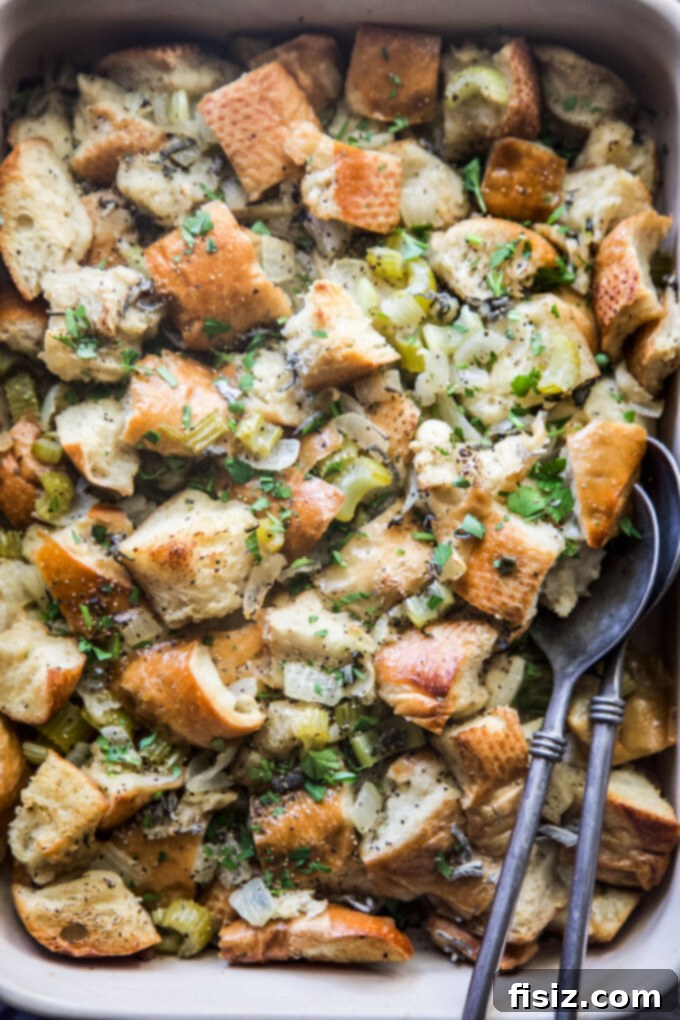
Stuffing might be a traditional dish, but the type of bread you choose can significantly influence its final texture and flavor profile. The key is to select a sturdy bread that won’t disintegrate when saturated with savory stock. Your choice of bread forms the very foundation of your stuffing, so pick one that you love! Here are some popular options and why they work so well:
- Sourdough: Offers a delightful tangy note that adds complexity to the overall flavor. Its robust crust and chewy interior hold up beautifully when moistened.
- French or Italian Loaves: These classic choices provide a neutral flavor base, allowing the herbs and vegetables to shine. Their sturdy crumb ensures the stuffing maintains a pleasant chewiness.
- Baguettes: Similar to French loaves, baguettes offer a crisp crust and airy interior when dried, creating a lighter stuffing.
- Challah: This rich, slightly sweet, and eggy bread lends a wonderfully tender texture and a subtle sweetness that complements savory ingredients.
- Brioche: For a truly decadent stuffing, brioche is an excellent choice. Its buttery, rich crumb creates an incredibly moist and flavorful result.
- Thick White Bread: Don’t underestimate the simplicity of a good quality, thick-sliced white bread. It’s a classic for a reason, absorbing flavors wonderfully and providing a familiar, comforting texture.
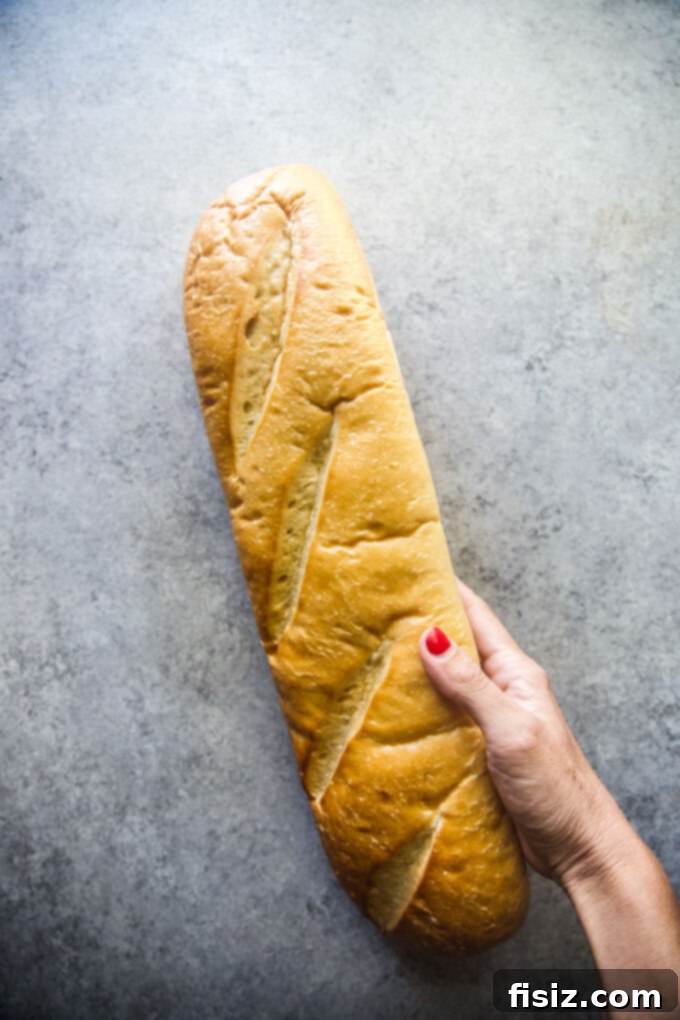
The Secret to Perfect Stuffing: Drying Your Bread
While fresh bread is delightful for sandwiches, stale, days-old bread is the absolute ideal for stuffing. This is a crucial step that prevents your stuffing from becoming a soggy, dense mass. Dry bread readily absorbs the flavorful stock and butter, resulting in a perfectly moist interior with a desirable crispy exterior. To achieve this, plan ahead and purchase your bread at least two to three days before you intend to make your stuffing. Cut it into cubes and spread them out on a baking sheet or clean surface, leaving them uncovered to air dry. If the holiday chaos makes you forget this step, don’t worry! You can quickly dry your bread cubes by spreading them on a baking sheet and toasting them in a preheated oven at a low temperature (around 250-300°F or 120-150°C) for about 15-20 minutes, or until they are completely dried through and lightly golden. Be sure to stir them occasionally for even drying.
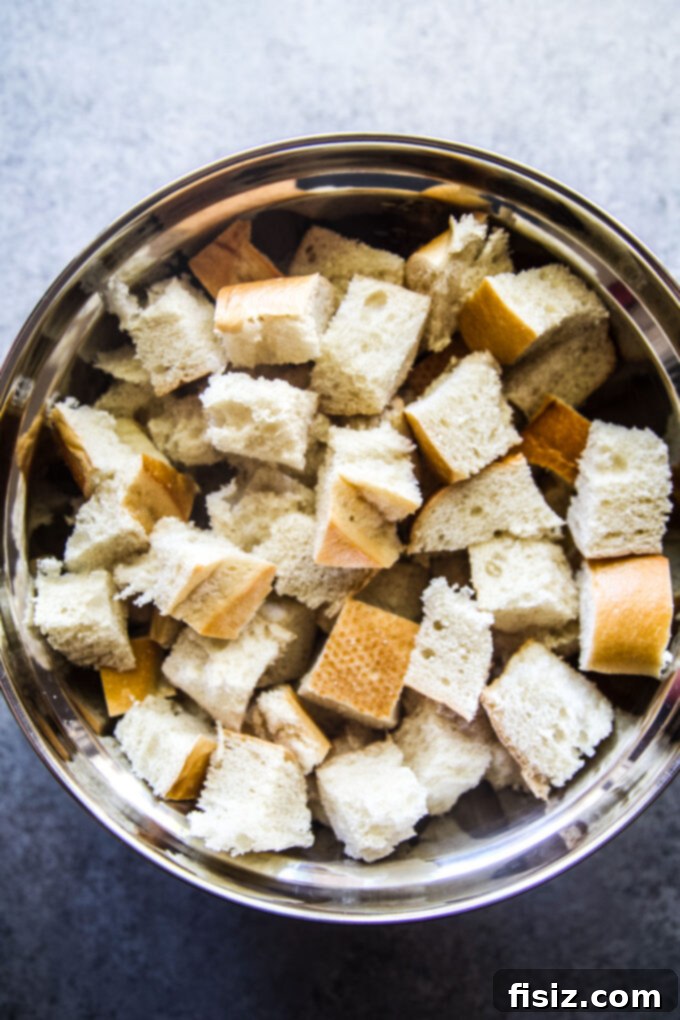
Beyond Bread: Exploring Alternative Stuffing Bases
While traditional bread stuffing is a beloved classic, you can get creative and experiment with other bases for a unique twist on this holiday favorite. These alternatives offer different textures and flavor profiles that can truly elevate your stuffing game:
- Cornbread: Offers a delightful slightly sweet and crumbly texture. It pairs wonderfully with savory ingredients and absorbs liquids beautifully. Try my Cornbread Stuffing with Salami for a delicious variation.
- Biscuits: Fluffy and buttery, biscuit-based stuffing provides a rich, tender, and incredibly comforting result.
- Naan: For an unexpected yet delicious twist, naan bread can create a wonderfully soft and flavorful stuffing. Its subtle yeasty flavor works well with many herbs. My Bacon, Apple, and Fennel Naan Stuffing is a must-try.
- Rice or Grains: For a gluten-free option or a different texture, consider using grains.
- Wild Rice: Adds an earthy, nutty flavor and a satisfying chewiness.
- Quinoa: A protein-rich option that provides a subtle nutty taste and a light, fluffy texture.
- Oatmeal: While less common, rolled oats can be used for a hearty, rustic stuffing, especially if you enjoy a more dense consistency.
Essential Ingredients for Unforgettable Stuffing
This stuffing recipe truly proves that you don’t need to splurge on fancy ingredients to create an extraordinary holiday side dish. It relies on simple, readily available pantry and fridge staples, yet yields the most flavorful and comforting stuffing you could ever imagine. Each component plays a vital role:
- Dry Bread Cubes: The foundation of our stuffing. Whether store-bought and pre-packed for convenience or homemade from your favorite days-old bread, ensuring they are dry is paramount for the perfect texture.
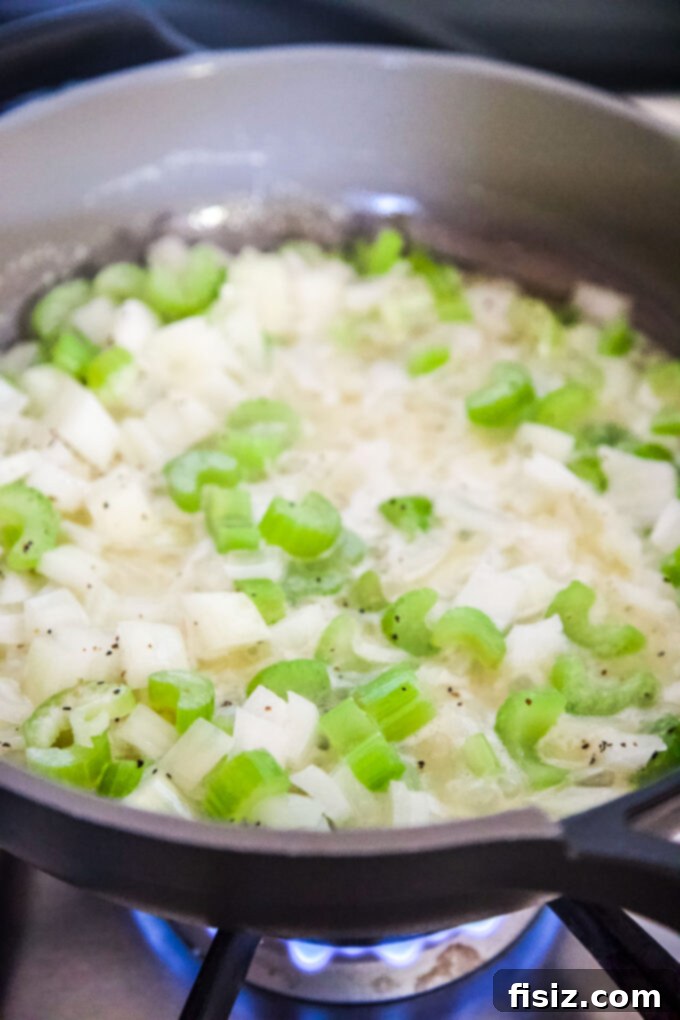
- Fresh Vegetables: I’ve opted for classic celery and onion, which provide an aromatic base and essential moisture. Don’t discard the celery leaves; chop them finely and include them for an extra layer of fresh, herby flavor.
- Homemade Turkey or Chicken Stock: This is where the majority of the rich, savory flavor comes from. I highly recommend using a homemade, from-scratch stock for its depth and richness. If using store-bought, invest in a high-quality, low-sodium option to best control the seasoning.
- Unsalted Butter: Butter is crucial for sautéing the vegetables and infusing the stuffing with a decadent, rich flavor. Using unsalted butter allows you to precisely control the salt content in your dish, ensuring it’s perfectly seasoned to your preference.
- Fresh Sage or Quality Poultry Seasoning: Fresh sage provides an earthy flavor with subtle minty and peppery notes, quintessential to classic Thanksgiving stuffing. If fresh sage isn’t available, a good quality poultry seasoning mix, typically made with dried sage and thyme, is an excellent substitute.
- Kosher Salt and Freshly Ground Black Pepper: These fundamental seasonings are added to taste, enhancing all the other flavors and bringing the stuffing to life. Always taste and adjust as you go!
Creative Add-ons and Delicious Variations
While this classic stuffing recipe is perfect on its own, it also serves as a fantastic canvas for additional flavors and textures. Don’t hesitate to personalize it with your favorite ingredients:
- Meaty Additions: For a heartier, more savory stuffing, consider adding cooked and chopped sausages (like Italian sausage or chorizo), pancetta, prosciutto, or even leftover roasted chicken or pork. Cook these before adding them to the vegetable mixture.
- Additional Vegetables: Beyond onions and celery, sliced mushrooms (cremini or shiitake), diced carrots, bell peppers, or even leeks can add more depth and color.
- Fruits and Nuts: For a touch of sweetness and crunch, incorporate dried cranberries, chopped apples, toasted pecans, or walnuts.
- Fresh Herbs: While sage is key, fresh thyme, rosemary, or parsley can further enhance the aromatic profile.
- Spices: A pinch of nutmeg, a dash of paprika, or a hint of cayenne can add warmth and a subtle kick.
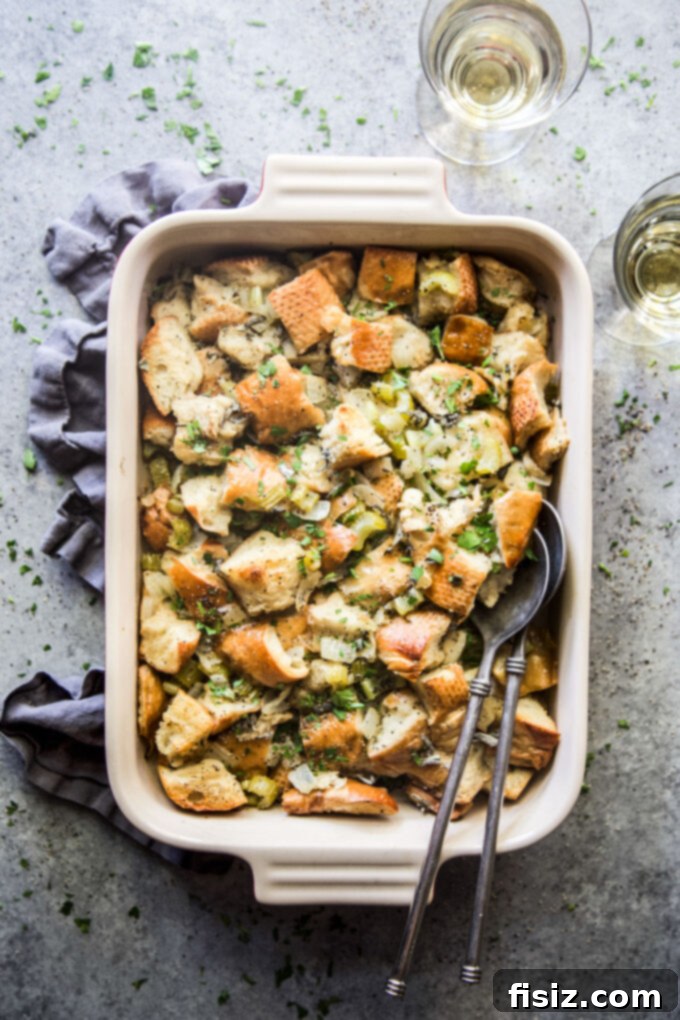
How to Make Classic Homemade Stuffing: A Simple Guide
One of the many reasons to love this classic stuffing recipe is its straightforward preparation, leaving you ample time to focus on other holiday dishes. The process involves a quick sauté of the aromatics, followed by combining them with the dry bread cubes and stock, then baking to golden perfection. It’s truly an easy Thanksgiving stuffing that delivers maximum flavor with minimal fuss.
Preparations:
- Preheat your oven to 350 degrees Fahrenheit (175 degrees Celsius).
- Lightly spray a 9×13 inch baking dish with nonstick cooking spray to prevent sticking.
Steps:
- Sauté the Aromatics: Place a large skillet over medium-high heat. Add the unsalted butter and allow it to melt completely. Once melted, add the chopped celery and onion. Season generously with kosher salt and freshly ground black pepper. Sauté for about five to seven minutes, or until the vegetables have softened and become translucent. Remove the skillet from the heat, then stir in the fresh chopped sage or poultry seasoning until fragrant.
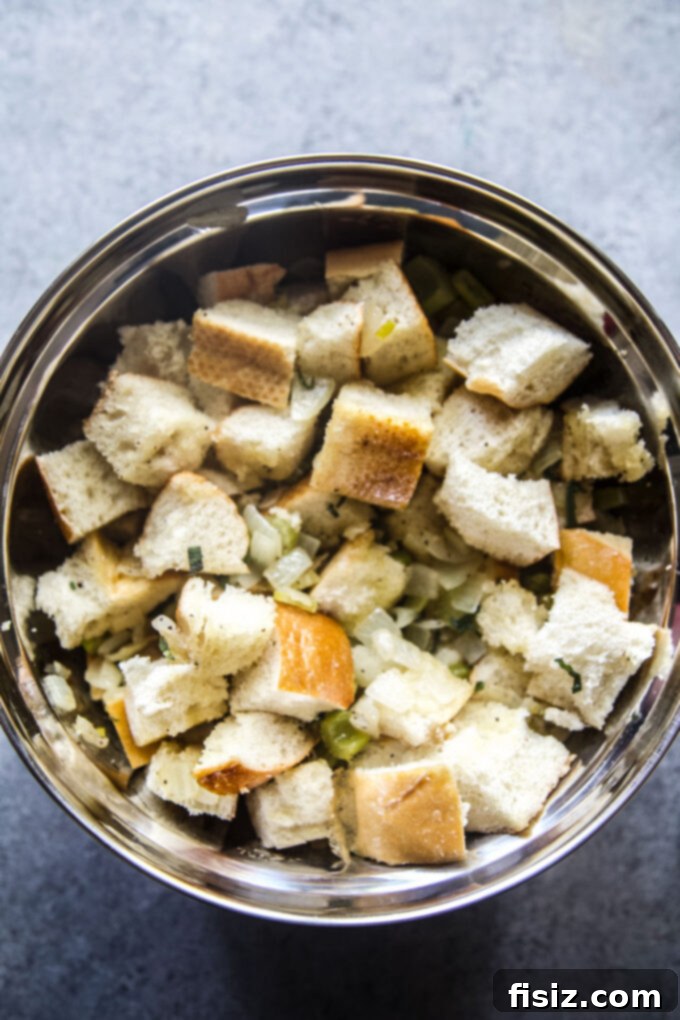
- Assemble the Stuffing: Transfer the dry bread cubes into a very large mixing bowl. Pour the warm buttery vegetable mixture evenly over the bread cubes. Gently toss everything together to ensure the bread is coated. Next, gradually pour in the homemade turkey (or chicken) stock. Add just enough liquid to thoroughly moisten the bread cubes without making them soggy. The goal is moist but not swimming in liquid. Gently toss again to evenly coat all the bread cubes, making sure no dry spots remain.
- Bake to Golden Perfection: Spoon the moistened stuffing mixture into your prepared 9×13 inch baking dish. Cover the dish tightly with aluminum foil. Bake for approximately 35 minutes. After 35 minutes, carefully remove the foil and continue baking for another 10 to 15 minutes, or until the top is beautifully golden brown and crispy. Once baked, remove from the oven and, if desired, garnish with a few fresh sage leaves before serving.
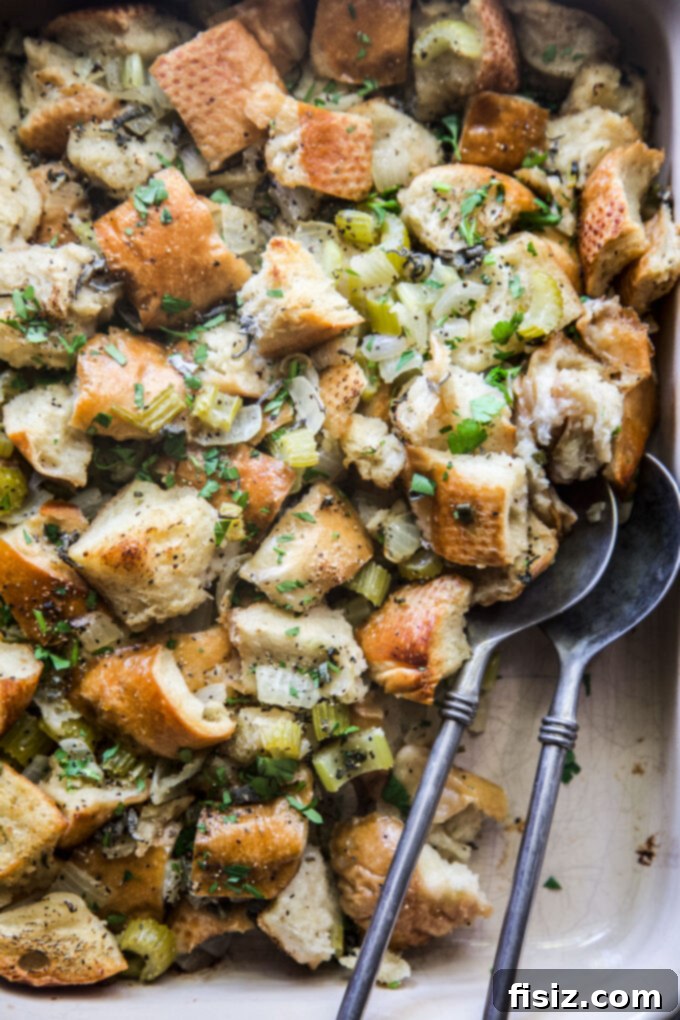
Expert Tips for Crafting the Best Homemade Stuffing
Achieving the perfect stuffing is all about understanding a few key principles. These expert tips will help ensure your classic homemade stuffing is moist, flavorful, and wonderfully textured every single time:
- The Importance of Stale Bread: This cannot be overstated. Always use stale, dry bread. Fresh bread will absorb liquids poorly and result in a dense, gummy, and unappetizing stuffing. If your bread isn’t sufficiently dry after a few days of air-drying, cut it into 1-inch cubes and toast them in a low oven (around 250-300°F or 120-150°C) until they are completely dried out and firm.
- Mastering Liquid Ratios: The amount of liquid is critical. Too little stock will yield a dry, crumbly, and bland stuffing. Too much will result in a mushy, soggy disaster. Add the stock gradually, in small batches, tossing gently after each addition. You want the bread cubes to be moist and plump, but not saturated or dripping. The stuffing should hold its shape when pressed lightly, but still be tender.
- Adjust Baking Time for Quantity: The baking time provided is a general guideline. If you’re using a significantly larger or smaller amount of bread, or a deeper baking dish, you may need to adjust the baking time accordingly. Always look for that golden-brown top and tender interior.
- For Crispier Stuffing: If you prefer a stuffing with more crispy edges and a less custardy interior, consider baking it in a metal baking sheet or a wider, shallower dish instead of a deep casserole. This increases the surface area exposed to heat, promoting more browning and crispiness.
- Don’t Overmix: Once you add the liquid, gently toss the ingredients together. Overmixing can break down the bread cubes and lead to a denser texture.
- Rest Before Serving: Allow the stuffing to rest for 5-10 minutes after coming out of the oven. This allows the flavors to meld and the stuffing to set slightly, making it easier to serve.
- Use Fresh Herbs When Possible: While dried poultry seasoning is a good substitute, fresh sage and other herbs will provide a brighter, more vibrant flavor that truly elevates the stuffing.
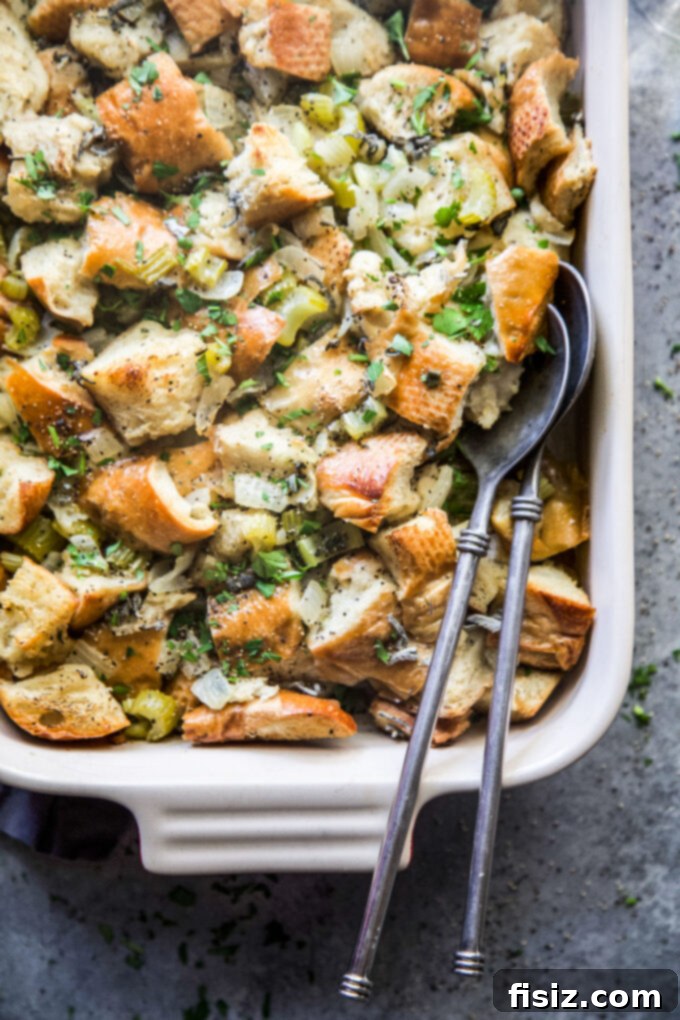
Make Ahead and Storing Notes for Stress-Free Holidays
One of the greatest advantages of this classic homemade stuffing recipe is its make-ahead potential, which is a lifesaver during the busy holiday season. Preparing components in advance can significantly reduce stress on Thanksgiving Day.
- Advance Preparation: You can prepare the stuffing mixture (combining bread, sautéed veggies, and stock) up to two days before baking. Simply assemble it in your baking dish, cover it tightly with plastic wrap or foil, and refrigerate.
- Baking Ahead: For ultimate convenience, you can even bake the entire stuffing dish a day before Thanksgiving. Allow it to cool completely, then cover it tightly and refrigerate. On Thanksgiving Day, simply reheat it in a preheated oven (around 300-325°F or 150-160°C), covered, until warmed through, then uncover for the last 10-15 minutes to crisp up the top.
- Storage: Leftover baked stuffing should be stored in an airtight container in the refrigerator for up to 3-4 days.
- Freezing: For longer storage, baked and cooled stuffing can be frozen in an airtight, freezer-safe container or tightly wrapped in aluminum foil for up to 1 month. Thaw overnight in the refrigerator before reheating.
- Reheating: To reheat, place the stuffing in an oven-safe dish, cover with foil, and bake at 325°F (160°C) until hot. Remove the foil for the last few minutes if you want to crisp up the top. You can also reheat individual portions in the microwave, though the texture might be slightly softer.
Classic Homemade Stuffing
Pin Recipe
Leave a Review »
Ingredients
- 1 1/2 cups Celery, chopped
- 1 cup Yellow onion, chopped
- 1/2 cup Unsalted butter
- 1 tbsp Chopped fresh sage or 1 tsp poultry seasoning
- 1 tsp Black pepper
- 12 cups Dry bread cubes (about 1-inch cubes)
- 1 1/4 cups Homemade turkey stock or chicken stock
- Kosher salt to taste
Instructions
-
Preheat the oven to 350 degrees F (175 degrees C). In a large skillet preheated to medium-high heat, melt the butter. Once melted, add in the chopped celery, onion, kosher salt, and black pepper. Cook the veggies, stirring occasionally, until softened and translucent, about five minutes. Remove from heat and stir in the fresh sage or poultry seasoning until fragrant.
-
In a large mixing bowl, place the dry bread cubes. Add the buttered onion mixture and toss gently to combine. Next, gradually add enough stock to moisten the bread cubes. Be careful not to over-saturate; the bread should be moist but not soggy. Gently toss again to ensure all bread cubes are evenly coated.
-
Spray a 9×13 inch baking dish with nonstick cooking spray. Pour the moistened stuffing mixture into the prepared baking dish, spreading it evenly. Cover the dish tightly with aluminum foil and bake for about 35 minutes. Remove the foil and continue to bake for another 10 to 15 minutes, or until the top is golden brown and delightfully crispy. Garnish with fresh sage on top before serving, if desired.