
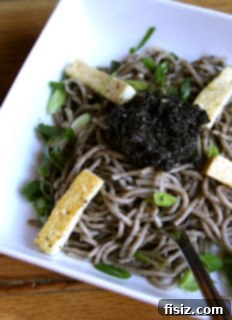
What do black sesame seeds, soba noodles, and tofu have in common? At first glance, these ingredients might seem like an unlikely trio, each hailing from distinct corners of Asian culinary tradition. However, when brought together in a harmonious blend, they create a dish that is both profoundly flavorful and incredibly nutritious: the Black Sesame Otsu.
My journey to discovering this unique recipe began with a little culinary exploration. While browsing through the inspiring pages of 101 Cookbooks, I stumbled upon a dish called “Black Sesame Otsu.” The name itself piqued my curiosity. What exactly was an “Otsu,” and how could black sesame seeds, known for their distinct nutty flavor, transform a noodle dish? I was eager to delve deeper, and what I uncovered not only broadened my culinary horizons but also ignited a passion to recreate this intriguing meal.
Discover the Unique Flavors of Black Sesame Otsu: A Wholesome Soba Noodle & Tofu Recipe
This recipe isn’t just a meal; it’s an experience that brings together diverse elements into a surprisingly cohesive and utterly delicious whole. Each core ingredient plays a vital role, contributing to the dish’s complexity, texture, and nutritional value. Let’s take a closer look at what makes black sesame paste, soba noodles, and tofu such culinary powerhouses, and why this Black Sesame Otsu is a must-try for anyone seeking a healthy, flavorful, and easy-to-prepare meal.
The Mystical Allure of Black Sesame Paste
Black sesame paste is far more than just a condiment; it’s a concentrated burst of flavor and nutrition, deeply rooted in Asian culinary traditions. Made from finely ground black sesame seeds, this paste offers a rich, earthy, and subtly bitter taste that adds incredible depth to both sweet and savory dishes. Unlike its lighter counterpart, white sesame, black sesame boasts an even more intense nutty profile and a striking dark hue that adds visual appeal to any plate, transforming a simple dish into something truly special.
In this Black Sesame Otsu recipe, the paste serves as the star of the dressing, creating a luxurious, creamy coating for the soba noodles. Its robust flavor is perfectly balanced with sweet and savory notes from natural cane sugar, soy sauce, and mirin, complemented by the bright zing of brown rice vinegar and a subtle kick from a touch of cayenne pepper. This unique blend of ingredients elevates the black sesame into a complex, irresistible sauce that truly defines the dish.
Beyond dressings, black sesame paste is incredibly versatile. It’s often found in exquisite Japanese desserts like mochi or ice cream, adding a sophisticated, nutty undertone. In savory applications, it can elevate simple dishes such as roasted broccoli, green beans, or even a basic bowl of rice. Rich in powerful antioxidants, healthy unsaturated fats, calcium, magnesium, and iron, black sesame seeds contribute significantly to overall well-being. They are known for supporting bone health, hair and skin vitality, and providing anti-inflammatory benefits, making this flavorful paste a true superfood ingredient worth incorporating into your daily diet.
Soba Noodles: A Japanese Staple Bursting with Goodness
Next on our culinary journey are soba noodles, a quintessential element of Japanese cuisine. These thin, versatile noodles are crafted primarily from buckwheat flour, giving them a distinct earthy flavor and a slightly chewy yet firm texture. While most commonly enjoyed in a hot, savory broth during colder months, soba noodles are equally delightful when served chilled, paired with a refreshing dipping sauce, or integrated into vibrant noodle salads like our Black Sesame Otsu. Their adaptability makes them a favorite year-round.
What truly sets soba noodles apart, beyond their appealing taste and texture, is their impressive nutritional profile. Buckwheat, despite its name, is not a type of wheat but rather a fruit seed, making it a fantastic naturally gluten-free grain (though always check labels if you have sensitivities, as some soba blends include wheat flour for texture). It’s an excellent source of complex carbohydrates, providing sustained energy without the spikes and crashes associated with simple sugars. Furthermore, soba contains a significant amount of dietary fiber, which aids digestion and promotes gut health.
Soba is also rich in essential minerals and vitamins. It provides a good source of manganese, a trace mineral crucial for bone health, metabolism of cholesterol and carbohydrates, and its role as a powerful antioxidant. It also contains thiamine (Vitamin B1), which is vital for a healthy nervous system, brain function, and the conversion of food into energy. No wonder soba noodles are a cornerstone of a balanced Japanese diet, contributing to their renowned longevity and vitality. These nutritional benefits make soba a healthier alternative to conventional wheat noodles, adding wholesome goodness to every meal.
Preparing soba noodles is incredibly simple and quick, often taking just a few minutes to cook. The key to perfect soba is to avoid overcooking them, as they can quickly become mushy. After boiling according to package directions, it’s customary and highly recommended to rinse them thoroughly under cold water. This step removes excess starch, prevents them from sticking together, and stops the cooking process, resulting in perfectly al dente noodles, especially when serving them cold or at room temperature in a refreshing dish like Black Sesame Otsu.
Tofu: The Versatile “Cheese of Asia”
Rounding out our trio of star ingredients is tofu, often affectionately referred to as the “cheese of Asia.” This moniker is quite fitting, given its soft, curd-like texture and its incredible chameleon-like ability to absorb the flavors of whatever it’s cooked with. Tofu is made by coagulating soy milk, a process similar to how dairy cheese is made from animal milk. The resulting curds are then pressed into blocks of varying firmness, from delicate silken tofu to sturdy extra-firm varieties.
For our Black Sesame Otsu, we opt for extra-firm tofu, which is ideal for this recipe because it holds its shape exceptionally well and develops a delightful golden crispness when pan-fried. Think of tofu as a blank canvas, and you, the home cook, as the Picasso of the kitchen. Its mild, almost neutral flavor allows it to readily soak up marinades, sauces, and seasonings, making it an incredibly versatile plant-based protein that can adapt to nearly any cuisine. You can bake it until chewy, sauté it for a tender bite, grill it for smoky notes, or even deep-fry it for an irresistible crispy exterior. In this recipe, pan-frying the tofu cut into matchsticks adds a crucial textural contrast against the soft noodles and creamy dressing.
Beyond its culinary adaptability, tofu is a nutritional powerhouse. It’s a complete protein, meaning it contains all nine essential amino acids, making it an excellent and indispensable protein source for vegetarians and vegans. It’s also rich in iron, calcium, manganese, selenium, and other vital minerals, contributing to strong bones, healthy blood, and overall vitality. Incorporating tofu into your diet is a delicious and efficient way to enjoy plant-based nutrition, contributing to a balanced and health-conscious lifestyle.
Crafting the Perfect Black Sesame Otsu: A Quick and Easy Masterpiece
After thoroughly researching each key ingredient, my enthusiasm to create this Black Sesame Otsu dish reached new heights. What I discovered was not only a delightful recipe but also one that is surprisingly simple and quick to prepare, making it perfect for a busy weeknight meal or a leisurely weekend lunch. This dish beautifully demonstrates how a few quality ingredients, thoughtfully combined, can yield a truly gourmet and satisfying experience.
The magic of Black Sesame Otsu lies in its harmonious blend of textures and flavors. The chewy, al dente soba noodles provide a comforting base, while the crispy pan-fried tofu adds a welcome crunch. The star of the show, the rich, creamy black sesame dressing, coats every strand of noodle and piece of tofu, ensuring every bite is packed with its unique, nutty, and savory-sweet flavor. The dressing, with its balanced notes of sweet, savory, tangy, and a subtle hint of heat from cayenne pepper, creates an incredibly satisfying mouthfeel and leaves a lasting impression.
This recipe is an excellent starting point for anyone looking to incorporate more plant-based meals into their diet. Whether you’re a seasoned vegetarian or a curious meat-eater exploring new culinary avenues, the Black Sesame Otsu offers a delicious and fulfilling alternative. Its significant nutritional benefits, combined with its ease of preparation, make it a dish you’ll want to add to your regular rotation. It’s proof that healthy eating can be both exciting and incredibly simple.
Tips for Perfecting Your Black Sesame Otsu
- Quality Ingredients Matter: Invest in good quality black sesame seeds or pre-made black sesame paste, authentic Japanese soy sauce, and fresh extra-firm tofu for the best possible results. The flavor profile will truly shine with premium components.
- Don’t Overcook Soba: Soba noodles cook very quickly. Follow the package directions closely, as overcooked noodles can become mushy. Rinsing them thoroughly with cold water immediately after cooking is crucial to stop the cooking process and achieve that perfect al dente texture.
- Press Your Tofu: For extra-firm tofu, pressing out excess water before cooking is highly recommended. This step allows the tofu to absorb flavors better and achieve a much crispier, more desirable texture when pan-fried.
- Adjust the Dressing to Taste: The black sesame dressing is the heart of this dish. Feel free to customize it! Add a bit more cayenne pepper for an extra kick, or a touch more sugar for increased sweetness, depending on your preference. Thinning the paste with a little bit of the reserved noodle broth is key for achieving the right creamy, pourable consistency.
Serving Suggestions and Variations
While Black Sesame Otsu is undeniably delicious on its own, it’s also incredibly adaptable and can be enhanced with a variety of fresh ingredients. You can boost the dish with thinly sliced cucumbers, shredded carrots, colorful bell peppers, or vibrant steamed edamame for added color, texture, and a nutritional punch. For those who enjoy a little extra crunch, a sprinkle of toasted cashews, peanuts, or even a few extra roasted pine nuts and sunflower seeds would be a wonderful addition, complementing the nutty dressing.
If you’re not strictly vegetarian, grilled chicken or shrimp could also be a delicious complement to the rich sesame dressing, adding another layer of protein. Serve this dish at room temperature or slightly chilled, making it an ideal choice for a refreshing lunch on a warm day, a light yet satisfying dinner, or even as a unique side dish. It’s a wonderful example of how simple, wholesome ingredients from different culinary backgrounds can come together to create a memorable and nutritious meal that truly delights the senses.
Black Sesame Otsu
Prep Time: 15 minutes
Cook Time: 15 minutes
Ingredients:
1 teaspoon pine nuts
1 teaspoon sunflower seeds
1/2 cup black sesame seeds
1 1/2 tablespoons natural cane sugar
1 1/2 tablespoons soy sauce
1 1/2 teaspoons mirin
1 tablespoon toasted sesame oil
2 tablespoons brown rice vinegar
1/8 teaspoon cayenne pepper
kosher salt
12 ounces soba noodles
12 ounces extra-firm tofu, drained
olive oil
1 bunch green onions, thinly sliced
Directions:
In a food processor, combine pine nuts, sunflower seeds, and sesame seeds. Pulse a few times until roughly chopped. Add sugar, soy sauce, mirin, sesame oil, brown rice vinegar, and cayenne pepper. Pulse a few more times until a thick paste forms. Transfer the mixture into a bowl and set aside.
Cook soba noodles according to package directions until al dente. Drain thoroughly and rinse under cold water to prevent sticking and stop the cooking process. Set aside.
Cut the drained extra-firm tofu into small matchstick-sized pieces. Preheat a large skillet over medium-high heat. Add a generous drizzle of olive oil. Once hot, add the tofu pieces and cook for a few minutes on each side, turning occasionally, until golden brown and slightly crispy. Remove from heat.
In a large mixing bowl, combine the cooked soba noodles with the prepared black sesame paste. Mix well, ensuring the noodles are evenly coated. If the paste is too thick, thin it out with a little bit of the reserved noodle broth (or water) until it reaches your desired consistency. Gently fold in the thinly sliced green onions and the crispy cooked tofu. Serve it up immediately, or chill slightly for a refreshing meal!
Recipe adapted from 101 Cookbooks
All images and text ©Lauren Grier for The Curious Plate