
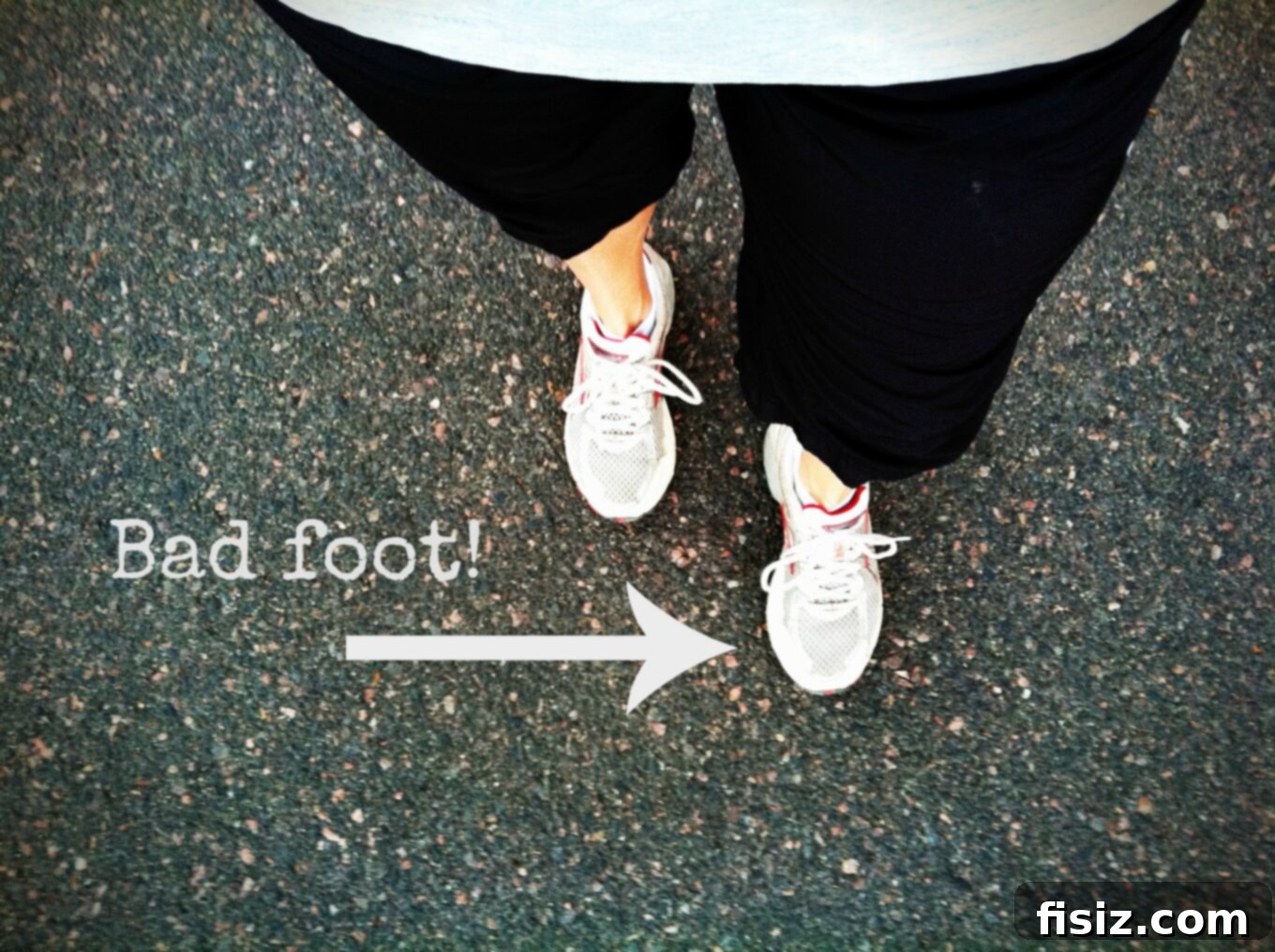
Houston, we have a problem.
Navigating Marathon Training: Overcoming a Bruised Foot and Embracing Resilience
The exhilarating journey of marathon training is often a path paved with sweat, determination, and unexpected challenges. My recent 18-mile long run, a crucial milestone in preparation for the Chicago Marathon, culminated not in triumph, but in a mysterious bruised foot. The cause remains elusive, a common enigma in the life of a dedicated runner. Perhaps it’s just one of the many occupational hazards we encounter when pushing our bodies to their limits.
While frustrating, this setback, in a peculiar way, doesn’t entirely surprise me. My feet, the unsung heroes of countless miles, have voiced their grievances since day one of this intense marathon training cycle. It’s a stark reminder that time marches on, and perhaps, with it, the undeniable signs of aging. Sigh. Yet, if there’s one invaluable lesson I’ve absorbed over a decade of running, it’s the profound importance of truly listening to my body and prioritizing rest.
Pushing through the pain this week would have been a catastrophic error, almost certainly leading to more significant, potentially permanent damage to my feet. The wisest course of action, then, is to completely scratch this week’s original plan and return to the pavement refreshed and recovered for my upcoming 20-miler. Of course, the unpredictable nature of recovery means only time will truly tell when I’ll be fully ready to resume my arduous journey towards the Chicago Marathon finish line.
The Unpredictable Path to the Chicago Marathon: Week Fourteen Recap
Marathon training is rarely a linear progression. It’s a dynamic dance between pushing boundaries and respecting limitations. Week fourteen of my Chicago Marathon preparation proved to be a masterclass in adaptation, turning a planned high-mileage week into an unexpected lesson in resilience and alternative fitness.
Monday – Essential Rest: The Cornerstone of Recovery
In the wake of my 18-mile run and the unwelcome appearance of a bruised foot, Monday was designated as a non-negotiable rest day. This wasn’t merely a scheduled break; it was a deliberate act of recovery and introspection. Planned rest days are always crucial, but they become absolutely paramount when an injury strikes. It’s during these periods of stillness that the body begins its intricate repair processes. For a marathon runner, acknowledging the need for rest, even when the training plan screams for mileage, is a sign of wisdom, not weakness. This day was about giving my foot the space and time it desperately needed to begin healing.
Tuesday – The Ill-Advised Attempt: A Mile of Regret
Despite my better judgment and the throbbing in my foot, I found myself lacing up my shoes on Tuesday. What started as a planned 3-mile run quickly devolved into a single, painful mile. This run was, unequivocally, a very stupid idea. Deep down, I knew my foot wasn’t ready to bear the impact, yet an irrational urge to “prove myself wrong” or perhaps simply the sheer stubbornness that often characterizes runners, drove me out the door. Note to self (and to any runner facing similar dilemmas): always, always listen to your gut instinct. That internal wisdom often knows best.
The brief, uncomfortable jog served as a stark, immediate reminder of my error. After just one mile, the pain was undeniable, and I called it quits. In a moment of self-deprecating humor, I actually laughed at my own boneheaded decision to even try. What was I thinking? The immediate consequence was clear: the rest of the week would be spent with my foot elevated, applying ice, and trying to undo the damage of that single, misguided mile. Such are the unforeseen “joys” and profound learning experiences of training for a marathon.
Wednesday – Embracing the Bike: A New Perspective on Cardio
When one cannot run, one must find alternative ways to maintain fitness. For me, this meant turning to the bicycle. Let me state for the record: I hadn’t ridden a road bike in over a year, and bikes, especially the whole clipping-in mechanism, still tend to freak me out. The thought of falling over was a constant companion, and I even managed to almost cause Mr. B to crash into me by taking a wrong exit ramp. Despite these initial jitters, the bike ride was unexpectedly great.
Mr. B and I cycled for about 40 minutes, and by the end, I felt as though I had just completed a significant run, but without the familiar knee pain that often accompanies high-impact exercise. This experience was a revelation. I can now definitively see why so many people passionate about endurance sports embrace cycling. It provides an excellent cardiovascular workout, strengthens the legs, and offers a much-needed reprieve for tired or injured joints. If I ever decide to hang up my running shoes, I would undoubtedly pick up cycling as my primary form of cardio. It’s an invaluable tool for any runner facing injury or looking to add low-impact variety to their training regimen.
Thursday – Strategic Rest: Nurturing the Healing Process
Following Wednesday’s successful, albeit slightly nerve-wracking, bike ride, Thursday was another dedicated rest day. This was not a day for activity, but for active recovery in the truest sense – allowing the body to heal without additional stress. When dealing with a bruised foot, consistent rest is as vital as any treatment. It’s a period for inflammation to subside, for tissues to repair, and for the body’s natural healing mechanisms to take precedence. These strategic rest days are non-negotiable for successful marathon training, particularly when injury recovery is paramount.
Friday – Unconventional Cross-Training: A Unique Approach to Fitness
When traditional cross-training options like swimming or elliptical don’t appeal, sometimes a truly unique activity can fill the gap. Does walking around shooting guns count as cross-training? In my book, it certainly does! I’m convinced it qualifies as a total body workout for several compelling reasons:
- Upper Body & Endurance: Holding a firearm, often weighing several pounds, for two hours straight is akin to repeatedly lifting a dumbbell. It engages the shoulders, arms, and back, building sustained strength and endurance.
- Core Stability: Maintaining a stable, balanced posture to ensure accuracy and safety is a demanding core workout. Every movement, every adjustment, requires engaging the abdominal and lower back muscles to prevent unwanted sway or deviation.
- Lower Body & Mobility: Strolling around a dirt field, navigating uneven terrain, and shifting positions works the glutes, quads, and hamstrings. It’s a low-impact form of mobility and strength building, far from passive.
I’ll tell you, this particular “cross-training” session was surprisingly fun and provided a welcome mental break from the usual rigors of marathon preparation. It reinforced the idea that fitness can be found in many forms, and sometimes, the most unexpected activities can offer significant benefits.
Saturday – Continued Rest: The Path to Full Recovery
Another day dedicated entirely to rest. The goal for the week was clear: facilitate healing. Saturday provided yet another opportunity for my foot to recover from the strain of the previous week and the ill-advised mile attempt. In marathon training, especially when recovering from injury, consistency in rest is as crucial as consistency in training. It’s easy to feel guilty about not “doing” something, but often, the most productive action is simply to do nothing at all.
Sunday – Building Biking Confidence: A Strong Finish to a Challenging Week
To conclude this adaptive training week, Mr. B and I ventured out for another bike ride, heading east in search of flat roads and minimal traffic. My initial apprehension about cycling had significantly diminished, replaced by a growing appreciation for the sport. This hour-long ride proved to be an excellent cardio workout and provided a fantastic challenge for my legs, all without any impact on my still-recovering foot.
I found myself reflecting on how beneficial it would have been to incorporate more cycling into the earlier stages of my marathon training. Perhaps a proactive approach to low-impact cross-training could have mitigated some of the stress on my feet, potentially preventing the current injury. It’s a valuable lesson learned for future training cycles: diversify your routine. This renewed enthusiasm for biking has certainly opened up new avenues for fitness, proving that even setbacks can lead to unexpected discoveries.
Total Miles Run This Week: 1
The final tally of one mile serves as a humble, yet powerful, reminder of the week’s challenges and the absolute necessity of prioritizing health over mileage targets. It was a week of forced slowdowns, tough decisions, and invaluable lessons, ultimately strengthening my resolve and refining my approach to marathon training.
Lessons Learned and Moving Forward: The Marathoner’s Mindset
Week fourteen has been a profound period of learning, reinforcing several critical aspects of endurance training. Firstly, the body’s signals are not suggestions; they are directives. Ignoring them, as I briefly did on Tuesday, leads to further complications and delays. Patience and humility are paramount in the face of injury, as is the understanding that recovery is not a passive process but an active commitment.
Secondly, cross-training is not merely a fallback option but an integral component of a holistic training plan. Cycling, in particular, has emerged as a fantastic low-impact alternative that maintains cardiovascular fitness and builds leg strength without exacerbating running-related stresses. Even unconventional activities, when approached mindfully, can contribute to overall fitness and mental well-being.
As I look ahead to the monumental 20-miler, my approach is now tempered with a newfound caution and an even stronger commitment to listening. The goal remains the Chicago Marathon, but the journey now includes a deeper appreciation for adaptability, resilience, and the sometimes-painful wisdom gained from setbacks. The path to the finish line is rarely straight, but with the right mindset, every detour offers a chance to grow stronger, smarter, and more attuned to the incredible machine that is the human body.