
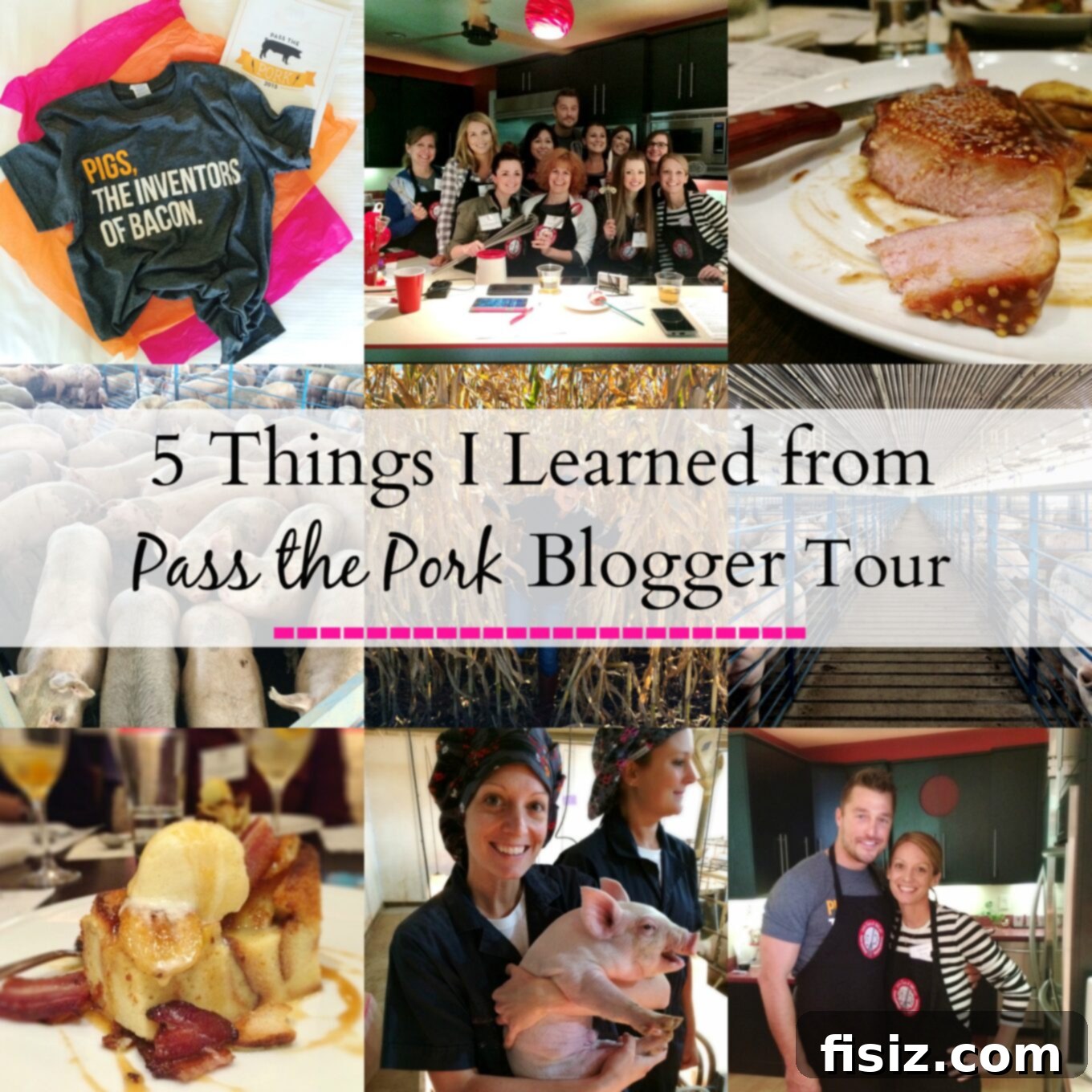
Last week, an exciting journey took me to Iowa City, Iowa, to participate in the eye-opening Pass the Pork Blogger Tour, an event proudly hosted by the National Pork Board. This trip was more than just a visit; it was an immersive educational experience designed to unveil the intricate world of modern pork production.
Despite growing up in Kansas, a state deeply rooted in agriculture, I had never before explored Iowa City, affectionately known as the “City of Literature.” This made my inaugural visit feel long overdue. My anticipation was high, eager not only to delve into the comprehensive operations of the pork industry but also, naturally, to indulge in all things bacon and other delicious pork products!
Before we dive deeper, you might be curious: what exactly is the Pass the Pork Blogger Tour? Farming is not just a profession; it’s a way of life, especially prevalent across the vast expanses of the Midwest. Having encountered numerous farmers over the years, I genuinely believed I possessed a solid understanding of farm life and the foundational principles of #realpigfarming. Yet, as I would soon discover, my preconceived notions barely scratched the surface.
To be completely candid, my prior knowledge regarding pig farming, the complexities of the pork industry, and the journey that brings a slice of crispy bacon to our breakfast tables was, in fact, quite limited. The tour utterly transformed my perspective, revealing a hidden world I was largely ignorant of. After spending an enlightening full day on the Brenneman family farm, a pivotal force in Iowa’s pork production, I returned home profoundly changed and immensely more informed.
So, get ready to dive into the heart of modern agriculture. I invite you to settle in, perhaps with a comforting cup of coffee and some sizzling bacon, as I share the top five transformative insights I gained from the Pass the Pork Blogger Tour. Prepare to have your understanding of pig farming and the pork industry completely revolutionized!
1) The Dominance of the Pork Industry in Iowa
It’s an astonishing statistic that truly highlights Iowa’s agricultural prowess: the ratio of pigs to people in the state is a remarkable 7 to 1. Yes, you read that correctly – there are seven times more pigs roaming Iowa’s farms than human inhabitants. This might seem surprising at first glance, but it makes perfect sense when you consider that Iowa proudly holds the title of the largest pork-producing state in the entire United States. This distinction isn’t just a matter of scale; it’s a testament to generations of dedicated farming, strategic resource management, and a deeply ingrained agricultural heritage.
But why Iowa? The answer lies in a combination of factors, most notably the abundant availability of what pigs primarily consume: corn and soybeans. Iowa’s fertile lands and favorable climate make it a prime location for cultivating these essential crops, which form the cornerstone of a pig’s diet. A single hog, from birth to market, will consume approximately 9 to 10 bushels of corn. With an average market weight of around 275 pounds, as reported by the Iowa Pork Producers Association, the sheer volume of feed required underscores the critical link between crop production and the success of the pork industry.
Visualize a perfectly synchronized agricultural ecosystem: Iowa farmers cultivate vast fields of corn and soybeans, which in turn feed their thriving pig populations. The pigs, in a marvel of natural efficiency, produce manure, a valuable organic fertilizer. This fertilizer is then meticulously applied back to the same crop fields, enriching the soil and nourishing the next harvest of corn and soybeans. This symbiotic relationship exemplifies both efficiency and sustainability at its best. It’s a closed-loop system that minimizes waste and maximizes resource utilization, ensuring the long-term viability of the farms. This commitment to sustainable practices and the provision of healthy pork has cemented Iowa’s reputation, allowing it to not only lead in domestic production but also to become a major global exporter. Iowa pork products reach distant markets in countries like Japan, Mexico, South Korea, and Canada, illustrating just how far-reaching the influence of Iowa’s dedicated farmers truly is. Indeed, it’s fair to say that the sun truly never sets on Iowa pork products, a testament to the continuous hard work and global demand for their high-quality meat.
2) Demystifying Modern Pig Farming and Welfare
For many, the image of pigs is still heavily influenced by popular culture, like the charming yet ultimately misleading portrayal in “Charlotte’s Web.” While we can appreciate Fern’s efforts to save Wilbur, such narratives often fall far short of accurately representing the dedication, science, and care involved in raising healthy pigs from birth to market today. It’s crucial to understand that pigs are remarkably efficient animals, exhibiting impressive growth rates and feed conversion ratios, albeit with relatively short lifespans optimized for pork production. A sow, a female pig, experiences a precise gestational period of three months, three weeks, and three days for her first pregnancy, with subsequent litters often following an equally predictable schedule, typically off by only a day or two. This precision is a marvel of nature and modern animal husbandry.
You might wonder about the breeding process for these highly productive animals. Modern pig farming often utilizes Artificial Insemination (AI), a sophisticated technique that offers numerous benefits. AI allows farmers to carefully select genetics, ensuring the propagation of breeds known for producing stronger, healthier piglets. This meticulous approach to breeding ultimately leads to robust pigs, which in turn yield high-quality, healthy pork. It’s a far cry from random breeding, allowing for controlled genetic improvement and disease management.
Contrary to the pervasive misconception of pigs being inherently dirty creatures wallowing in mud and attracting diseases, the reality on modern farms is dramatically different. Today’s pig farms prioritize cleanliness, biosecurity, and animal welfare. During our tour of the Brenneman farm, one of Iowa’s premier pork producers, we observed their meticulous approach. Sows in farrowing facilities (where they give birth) are housed in specialized crates. The primary purpose of these crates is to ensure the safety of both the sow and her piglets during and immediately after birth. When a sow gives birth to an average litter of around 14 piglets, the risk of accidental crushing by the mother is significant. The crate design allows the sow to lie down comfortably while providing a protected area for the fragile newborns, ensuring they can nurse safely and immediately. This controlled environment also maintains optimal hygiene, which is crucial for preventing the spread of diseases and ensuring a healthy start for the piglets. Furthermore, by facilitating a structured birthing process, the crates allow farmers to assist the sow more effectively if needed, significantly lowering the still-born rate and improving overall piglet survival.
A truly profound moment during my visit was having the opportunity to “sleeve a sow,” which involved assisting with the birthing process. It was an incredibly beautiful and humbling experience, far from intimidating. To be able to physically help a mother pig and ensure her comfort during such a vital time was an unforgettable privilege and underscored the deep care and dedication exhibited by modern pig farmers.
3) Unleashing the Culinary Versatility of Pork
My childhood kitchen, like many others, often favored chicken or beef as the primary protein sources, with pork making only occasional appearances. However, culinary trends and my own palate have evolved considerably. Today, my husband, Mr. B, and I happily incorporate pork into our weekly menu two to three times on average. The sheer versatility of pork is truly remarkable. From succulent pork chops grilled to perfection to savory pork tacos bursting with flavor, slow-cooked pulled pork that melts in your mouth, or robust pork chorizo stuffed peppers – the possibilities are virtually endless. If you’re looking to effortlessly introduce more pork into your diet, consider a simple swap: replace ground beef with ground pork in your favorite spaghetti sauce recipe for a delicious and flavorful twist. This easy substitution immediately showcases how adaptable pork can be in a wide array of dishes.
A common apprehension in cooking pork stems from a fear of an undercooked “pink center,” leading many to overcook their cuts until they’re dry and tough. However, I’m here to tell you that a slight pink blush in the center is not only safe but highly desirable for juicy, tender pork! The United States Department of Agriculture (USDA) has revised its recommended safe cooking temperature for whole cuts of pork to 145 degrees Fahrenheit, followed by a three-minute rest. This updated guideline has revolutionized home cooking, making those dreaded dry, rock-hard pork chops a thing of the past. It allows for a much more enjoyable eating experience, ensuring your pork remains moist and flavorful.
Crucially, this advancement in recommended cooking temperatures is a direct reflection of significant improvements in the safety and sustainability of modern pig farming practices, like those meticulously followed at the Brenneman farm. Healthier pigs, raised in optimized environments with stringent biosecurity, directly translate to healthier, safer pork for consumers. It’s a clear connection: responsible farm-to-fork practices empower us to enjoy pork cooked to its most delicious potential.
Therefore, I wholeheartedly challenge you to experiment with a new pork dish this coming weekend. And if you’re feeling adventurous and want to experience a true Iowan culinary gem, I highly recommend trying “ham balls.” These unique, savory-sweet meatballs are a beloved local delicacy. I had the pleasure of sampling them during my trip, and I can attest they are an unexpectedly delightful and truly life-changing treat. Don’t knock them until you’ve tried them!
4) The Unsung Heroes: Dedication in Family Farming
To merely say “hard work” is a profound understatement when describing the multifaceted demands placed upon modern farmers. The agricultural landscape is constantly evolving, with new standards, increasingly discerning consumer expectations, and an unrelenting pressure to be bigger, better, faster, and stronger in every aspect of their operation. I had the privilege of touring the Brenneman farm in Washington County, one of Iowa’s largest and most respected pork-producing facilities. This farm has been family-owned and operated since 1980, embodying a legacy of dedication and care. To say they simply “care” about their pigs barely scratches the surface; their commitment borders on an unwavering passion for animal welfare and environmental stewardship.
The Brenneman farm operates as a fully integrated swine and grain operation. This means they meticulously manage every stage of their pork production, from cultivating the crops that feed their pigs to raising the animals themselves. As previously mentioned, they take immense pride in fostering a completely sustainable farm ecosystem, where resources are recycled, and efficiency is paramount. This holistic approach ensures quality control and environmental responsibility from the ground up.
What truly sets the Brenneman family apart is their meticulous attention to biosecurity – a critical practice designed to protect their animals from disease. Our entry onto the farm vividly illustrated this commitment: we had to “shower in and shower out.” This rigorous protocol meant that before we could even step foot inside the state-of-the-art facilities where pigs are born, weaned, and raised, we had to undergo a thorough showering process to ensure we were completely germ-free. This strict biosecurity measure is absolutely vital for safeguarding the health of the swine herd, which, as you might have guessed, directly translates to happy, healthy pigs and, consequently, healthy, safe pork for consumers. Once we were sanitized and ready, the comprehensive tour commenced, revealing an operation that was truly cutting-edge. I initially harbored concerns that the barn, with so many pigs, might be overwhelmingly noisy or malodorous, and that the animals might appear distressed in their controlled environments (like farrowing crates). However, these fears were quickly dispelled. The facilities were remarkably clean, surprisingly quiet, and exuded an atmosphere of nurturing care. Each pig seemed calm and well-tended. Leaving the farm, I felt an overwhelming urge to embrace every member of the Brenneman family. Their profound passion, unwavering determination, and genuine love for raising healthy, happy pigs were palpable in every corner of their operation.
Next time you encounter a member of a family hog farm, consider offering them a sincere thank you or even a heartfelt hug. Without their relentless dedication and tireless efforts, we might very well find ourselves living in a world devoid of that beloved breakfast staple: bacon, and many other delicious pork products.
5) Cherishing Our Food: A Deep Appreciation for the Journey
The most profound and enduring lesson I took away from my illuminating trip to Iowa was remarkably simple, yet deeply impactful: never take your food for granted. Behind every meal on our dinner tables lies an intricate web of tireless effort and dedication from countless individuals. These are the folks who work relentlessly, often around the clock, to ensure that we have access to healthy, safe, and delicious food. Their contributions span a vast array of tasks, many of which remain unseen by the average consumer.
Consider the unseen hands involved: there are farmers meticulously harvesting corn and soybeans to feed livestock, skilled farm workers carefully “sleeving a sow” to assist with birthing, dedicated advocates lobbying for improved food production standards and policies, and brilliant researchers constantly innovating new ways to breed healthier, more resilient animals. All these crucial activities, and so many more, happen diligently behind the scenes, forming the backbone of our food supply chain. Each step is vital, ensuring quality, safety, and sustainability.
So, the next time you find yourself navigating the aisles of your local grocery store, I encourage you to pause for a moment. Take a deep breath and truly appreciate the incredible journey your food has made to reach you. Reflect on the immense effort, expertise, and passion invested by American pork producers and agricultural workers across the nation. Their unwavering commitment to excellence, animal welfare, and sustainable practices ensures that we consistently enjoy some of the finest, safest, and most responsibly produced food in the world. Their dedication makes American pork producers truly exceptional.
And with that, my comprehensive account of the Pass the Pork Blogger Tour comes to a close! I extend my heartfelt gratitude to Erin, Tim, Char, and Rob Brenneman, the incredible family behind Brenneman Pork. Thank you for your immense generosity in opening your farm and your lives to us, and for profoundly expanding our understanding and appreciation for modern pig farming. Your transparency and passion were truly inspiring. Furthermore, a massive thank you to the National Pork Board for orchestrating this invaluable tour and for broadening our horizons regarding the dynamic and essential pork industry.
Until my next adventure, Iowa!
***This post was sponsored by the National Pork Board. As always, all opinions expressed are 100% my own and reflect my genuine experience.***