
A Culinary Journey to Libya: Exploring North African Spiced Harissa and Resilient Flavors
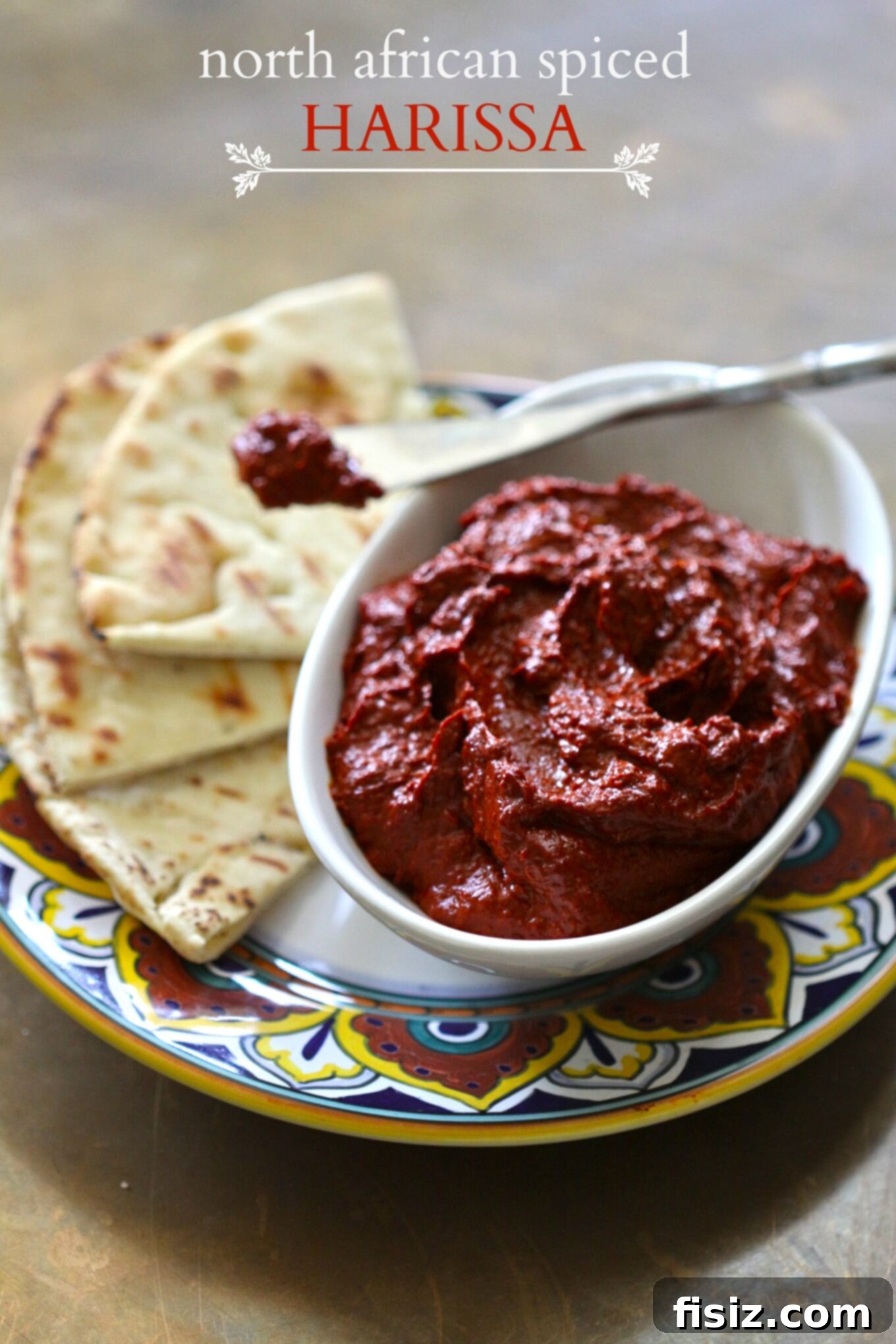
Embark on an extraordinary culinary adventure with our special travel report, delving into the heart of North Africa. This unique exploration unveils the vibrant flavors of the region, highlighted by the exquisite North African Spiced Harissa with Grilled Pita. Prepare to immerse your senses in a taste sensation that captures the true essence and remarkable resilience of this captivating part of the world.
Life often takes unexpected turns, and for my husband, Mr. B, a new job presented a significant one: extensive international travel. Last year, he embarked on a professional journey that frequently took him “across the pond,” a phrase that encapsulates both excitement and a touch of apprehension for any spouse back home. My initial reactions mirrored those of many others whose partners travel for work – a mix of exhilaration at the new opportunities balanced with a knot of nervousness and an undeniable sense of impending loneliness.
The thought of him being thousands of miles away, far from anything familiar, was challenging to process. It required a significant mental adjustment to reconcile the distance and the unfamiliarity of his new environments. However, the first few months of his travels proved less daunting than anticipated. It primarily became a matter of establishing a new routine, adapting to the cycles of departure and return. Trips to Europe felt somewhat like extended vacations, offering a degree of comfort and predictability. But this comfortable rhythm was abruptly shattered when he booked a flight to a destination that truly redefined “far away”: Libya.
Unveiling Libya: Geography, History, and First Impressions
Just a few years ago, Libya occupied a distant corner of the world’s consciousness, often mentioned in news cycles with a tone of caution and peril. My own knowledge of this North African nation was limited to these fleeting, often alarming, reports. Yet, Libya holds a compelling geographical and historical narrative. Situated in Northern Africa, it shares its eastern border with Egypt, its western flank with Tunisia and Algeria, and its southern expanses with Sudan, Chad, and Niger. Despite being home to a relatively modest population of 6.4 million people, Libya proudly stands as the 17th largest country globally by land area, a testament to its vast and diverse landscapes.
A staggering 90% of Libya’s immense landmass is dominated by the formidable Sahara Desert, a region where rainfall is so scarce that the last recorded precipitation in some areas was in 1998. This stark reality stands in fascinating contrast to historical accounts. During the early Greek period, the Libyan coastline was reputedly a lush, green paradise, a vibrant oasis that nurtured life. This image is far from what typically comes to mind today, isn’t it? Over centuries, the country experienced a rich tapestry of rule, falling under the influence of the Greek, Roman, and Ottoman empires before becoming an Italian colony. Finally, in 1951, Libya achieved its hard-won independence.
However, the journey to sustained stability was arduous. From 1969 until a transformative revolution, Libya was governed by Muammar Gaddafi, a dictatorial leader whose regime cast a long shadow over the nation. His rule concluded dramatically in August 2011, when the Libyan people rose up to overthrow him and his corrupt administration, ushering in a new, albeit challenging, era for the country.
An Insider’s Perspective: Interview with Mr. B
To truly understand the complexities and wonders of Libya, we turn to Mr. B, who has experienced the country firsthand. His insights offer a rare glimpse into a nation in transition, from its challenging political landscape to its rich cultural heritage and, of course, its unique culinary offerings.
What were your first thoughts when you knew you were traveling to Libya?
Mr. B: My initial reaction was a potent mix of excitement and apprehension. The idea of an adventure to such a historically significant and largely unknown place was thrilling. However, the prevailing news narrative painted Libya as an incredibly dangerous place, almost suggesting Westerners were actively hunted in the streets. This created a significant internal conflict. On the other hand, my English and French colleagues had already made several trips back to Tripoli since the Arab Spring. This gave me some reassurance, making me wonder if it could truly be as bad as the media portrayed.
Did you know anything about Libyan culture before you left?
Mr. B: Honestly, not a thing. I didn’t even realize it was located in Africa. In my mind, Libya had always been associated with the distant Middle East. It was quite a revelation to discover it’s only a three-hour flight from Frankfurt, Germany. This geographical proximity, yet cultural distance, was one of my first striking realizations.
When your plane landed in Tripoli, how did you feel?
Mr. B: The moment the plane touched down, my first thought was an emphatic, “Holy Crap! I just landed in Libya!” The journey itself had been quite routine – a quick stop in Washington D.C. for visa processing, followed by a night in London to meet with the Libya team. Everything leading up to the landing felt like business as usual, which strangely prevented me from fully contemplating the gravity of the destination. At that time, flights from London to Tripoli were restricted to 50 passengers, allowing the plane to complete a round trip without needing to refuel in Libya. I anticipated things would get “sporty” upon arrival, but nothing truly prepares you for the visceral experience of stepping off that plane for the very first time.
What was your first impression of Libya?
Mr. B: Chaos. Utter chaos. The drive from the airport into downtown Tripoli was a surreal experience. There were wrecked cars strewn along the highway, and incredibly, people were driving against the flow of traffic, heading head-on into oncoming vehicles! One of the English gentlemen with me offered the best advice: “Don’t try to make sense of it.” The route also passes directly by Bab al-Azizya, Gaddafi’s former main compound, which was utterly destroyed. I had never witnessed such a scene of devastation; it was truly unlike anything I’d ever seen.
What is the overall feeling from the Libyan people?
Mr. B: The people themselves are incredibly warm and genuine. On my last trip, I was fortunate enough to be given a private tour of Awjilah and the historic Atik mosque. Later, we were invited to our host’s house for dinner, where his sons prepared a memorable ginger-roasted lamb, served with fresh dates, olives, and peaches harvested directly from their family orchard. The hospitality is beyond comparison; Libyans will genuinely go out of their way to ensure your comfort and showcase the best side of their country. They are eager to share their achievements and their aspirations for the future with the world. I was truly caught off guard by their sincerity. However, there’s another, more complex side to the experience. The country feels somewhat bipolar. One day, you’ll encounter an overwhelming sense of promise and hope, only to feel the next day that it’s safer not to leave your hotel room. There’s a constant undercurrent of paranoia, and it’s rooted in a very real, though not always outwardly evident, danger. The situation is precarious, but the people’s spirit shines through.
Do you think things are different now that Gaddafi is no longer in power?
Mr. B: As I wasn’t there during his rule, I can’t speak to what it was like firsthand. However, from talking to countless locals, I consistently get the impression that things are significantly better. The people acknowledge they have a very long road ahead, but when you’re in Tripoli, the prevailing sense of hope is genuinely infectious. Our office manager, for instance, told me she wakes up every single morning thankful that Gaddafi is gone. Under the old regime, common citizens were often forbidden from speaking or reading English, so she taught herself. Almost everyone I’ve met has a personal story about the old regime, and none of them have happy endings. While I’m certainly no expert on Libyan culture, this pervasive feeling of happiness and liberation seems to be a relatively new phenomenon there. It’s not something easily explained; rather, it’s a profound joy that truly needs to be experienced to be understood.
Libyan Daily Life and Culinary Traditions
Even as the people of Libya navigate an ongoing identity crisis and strive for stability, the rhythm of everyday life persists. Just like in any country, individuals rise each morning, heading to work, tending to their families, and participating in the vibrant pulse of their communities. Libyans continue their cherished traditions, frequenting local markets to procure the freshest fish, succulent meats, and warm, crusty breads. The air in these bustling marketplaces is often thick with the exotic aromas emanating from barrels overflowing with fragrant spices, each telling a story of the region’s rich culinary heritage.
Standard Libyan cuisine is characterized by its comforting simplicity and profound flavors, featuring hearty soups, an abundance of fresh seafood, pasta influenced by its Italian colonial past, and a variety of sweet fruits. Among these staples, one particular favorite stands out: harissa. Often likened to a spicy ketchup or a vibrant hot sauce by Westerners, harissa is much more than a condiment; it’s a staple, an integral part of nearly every meal, reflecting the boldness and warmth of Libyan hospitality.
What exactly is harissa?
Mr. B: The first time I encountered harissa on the table, I admit I was a little wary. Its appearance is somewhat reminiscent of ketchup, with its deep red hue, but the aroma immediately signals a significant spicy kick. When I finally tasted it, my eyes instantly darted around, searching for a bottle of water, and my mind braced for an intense heat. However, once you get past that initial fiery burst and dab just a little on some fresh bread, you discover an incredibly complex and irresistible flavor. It’s truly addictive. I couldn’t wait to tell CGM all about it!
How do the Libyans typically eat harissa?
Mr. B: It’s used much like Frank’s RedHot here – they put it on everything! You’ll find it accompanying fried eggs for breakfast, adding a vibrant kick to salads, and enhancing the flavor of various fish dishes. However, its most common and arguably most delightful application is simply spread on fresh flatbread. The baked goods in Libya are phenomenal. As someone who’s not much of a baker, I was constantly amazed at how they managed to create such incredible breads amidst all the apparent chaos and challenges around them. It speaks volumes about their resilience and love for their culinary traditions.
What was your favorite meal while you were there?
Mr. B: Due to security constraints, our options for dining out were somewhat limited, so my base for comparison isn’t as broad as I might have liked. But, there was one meal during my last trip that truly stood out. We ate at a restaurant that also doubled as a fish market. The experience began with us sitting down, enjoying a drink (usually Coke, as alcohol is strictly forbidden), and snacking on harissa with freshly baked bread. Then, you head over to the fishmonger, where you personally select your appetizer and main course from the day’s catch. The fish is then expertly cut and grilled right there on the spot. I don’t know what they were using to fire the grill, but the flavor was unlike anything I’d ever tasted before. Just a simple dash of lemon, perhaps a little salt and pepper, and it was absolutely exquisite – pure culinary perfection.
Crafting Harissa: A Taste of North Africa at Home
Given the country’s ongoing journey towards stability, many Western tourists may not be visiting Libya in the immediate future. As we observe and hope for this nation to forge its path forward, we can honor its rich culture in a small, yet significant, way: by bringing a taste of Libya into our own kitchens through the creation of harissa. The recipe for harissa presented here incorporates a touch of Latin infusion with the inclusion of ancho chilies, yet it unmistakably boasts the same vibrant, spicy flavors found in the heart of Libya.
Creating your own harissa is surprisingly quick and remarkably easy. The process involves rehydrating dried chilies, blending them with a selection of aromatic spices, and a simple whir in a food processor or blender. The magic truly happens as it rests; the longer the harissa sits, the more its complex flavors meld and deepen, transforming into a rich, aromatic paste. Spread this delectable condiment generously over warm, grilled pita bread or any flatbread, and you will instantly be captivated by its distinctive charm. It’s a simple act that transports your palate to the bustling markets and warm hospitality of North Africa.
Any final thoughts on your travels?
Mr. B: Traveling to these incredibly diverse and sometimes challenging places has profoundly changed my perception of food. I never truly understood the concept of “comfort food” before. For me, food was simply food, right? But that perspective has completely shifted. Everywhere I’ve visited, I’ve managed to find something subtly familiar, a culinary anchor that connects me, even if momentarily, to home. Whether it was Nigerian barbecue chicken, comforting Polish goulash, or fresh Croatian seafood, these dishes offered a sense of grounding amidst the unfamiliar. Yet, through all these discoveries, my absolute favorite remains harissa. It’s more than just a sauce; it’s a taste of resilience, warmth, and the vibrant spirit of a place that has left an indelible mark on me.
As for Libya itself, it is undoubtedly a beautiful country, steeped in rich culture and history. I’ve had the privilege of forging great friendships and meeting truly amazing people there. The future of the nation may still seem uncertain, but just as with the unexpected and powerful rise against Gaddafi, who knows what incredible transformations lie ahead? Perhaps the journey will culminate in a stable, thriving nation that truly embodies the hopes of its people. Until then, we can celebrate its spirit with North African Spiced Harissa with Grilled Pita—a taste that embodies the region’s enduring resilience and unparalleled flavor.
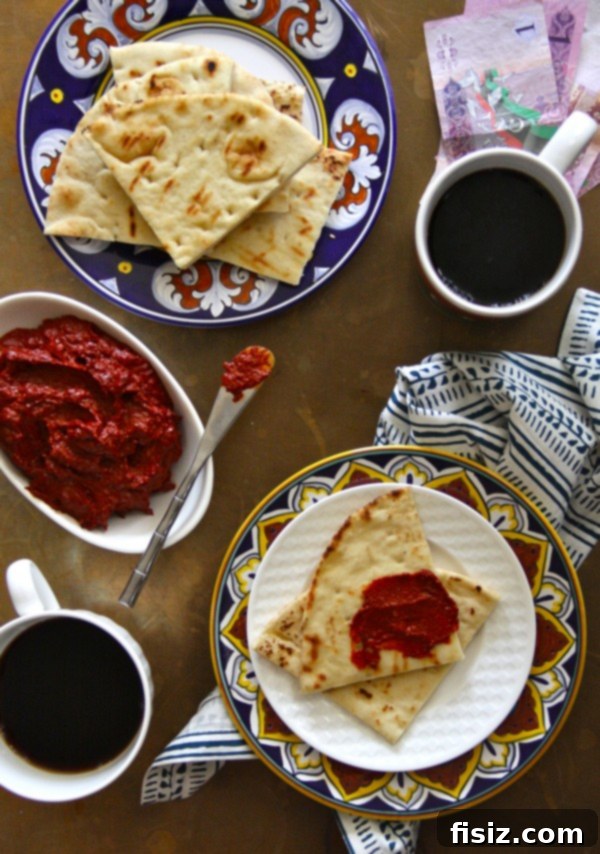
Our culinary journey concludes with the unforgettable notes of North African Spiced Harissa and Grilled Pita—an exotic blend that transforms each bite into a savory memory, perfect for any culinary explorer seeking authentic flavors and inspiring stories.