
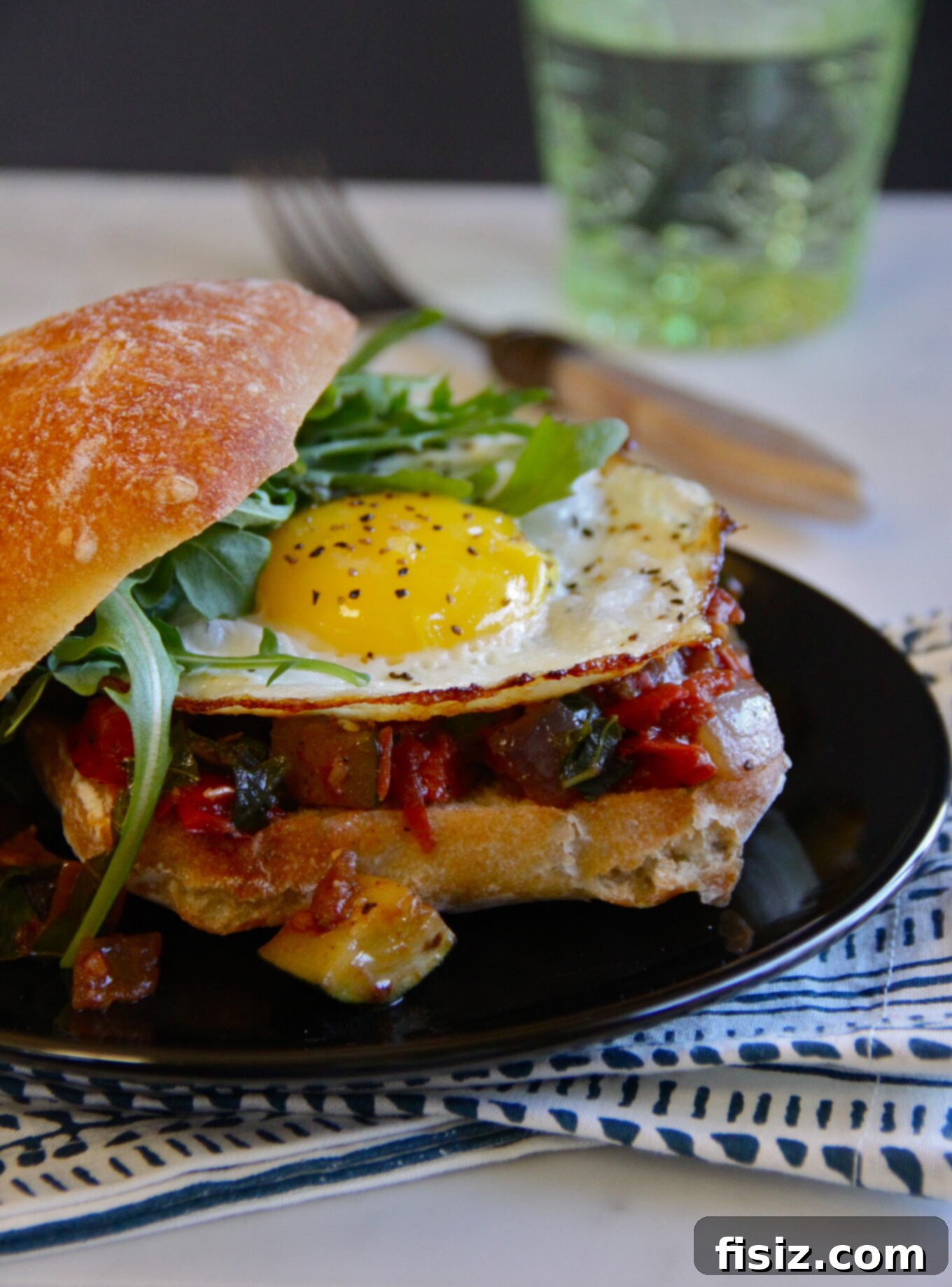
Demystifying Ratatouille: From Classic French Stew to Brunch-Ready Egg Sandwiches
Ah, Ratatouille. The name itself conjures images of sun-drenched Provençal markets and rustic French kitchens. This quintessential French vegetable stewed dish, originating from Nice, is a vibrant celebration of summer’s bounty. For many, the idea of preparing a classic French dish can feel daunting, shrouded in an aura of complexity and precision. Last week, however, I decided it was time to shed that apprehension and dive headfirst into the world of “the touille.”
My culinary journey often starts with a hint of trepidation when it comes to French cuisine. Terms like Coq au Vin, Escargots de Bourgogne, or Cassoulet have a way of making me feel like an amateur in the kitchen, much like Ricky Bobby from Talladega Nights in that hilarious scene where he’s forced to declare his love for crepes. My initial thought echoed his sentiment: “Crepes? I love me some thin little pancakes!” But just as Ricky Bobby eventually embraced the thin pancake, I discovered that Ratatouille, while demanding commitment, is far from intimidating once you understand its soulful process.
Many classic French dishes carry a mystique that can be off-putting to the home cook. We often envision hours of meticulous preparation, obscure ingredients, and techniques reserved for professional chefs. Yet, the beauty of dishes like Ratatouille lies in their simplicity at heart – celebrating fresh, seasonal ingredients with thoughtful preparation. My goal was not just to recreate a recipe but to truly understand the essence of this beloved Provençal stew, to peel back the layers of perceived difficulty and discover the pure, unadulterated joy of its creation.
The Art of Ratatouille: Unlocking Deeper Flavors
The true essence of an authentic Ratatouille lies in a principle that cannot be rushed: browning each vegetable individually. This isn’t merely a suggestion; it’s a fundamental step that elevates the dish from a simple vegetable medley to a symphony of distinct, rich flavors. When you brown each component – the eggplant, zucchini, bell peppers, and onions – separately, you allow their natural sugars to caramelize, intensifying their unique characteristics. This process creates a depth of flavor that simply cannot be achieved by tossing everything into the pan at once.
This method requires patience and commitment. You can’t pull a “Kim Kardashian” and bail on the process midway; you have to be fully invested. However, I promise you, the wait is incredibly worth it. The transformation that occurs when each vegetable develops its own golden-brown crust and inherent sweetness before merging with its counterparts is nothing short of magical. Imagine the sweet earthiness of eggplant, the gentle bitterness of zucchini, the vibrant crunch of bell peppers, and the savory notes of onion, all enhanced and then brought together in a harmonious blend. Each bite becomes a party for your palate, a testament to the power of thoughtful cooking.
Beyond the browning, the quality of your ingredients is paramount. Opt for fresh, ripe, and vibrant vegetables. The beauty of Ratatouille is that it’s inherently a seasonal dish, designed to highlight the freshest produce of summer. Using high-quality olive oil also makes a significant difference, adding a fruity, robust foundation to the stew. This careful attention to both ingredients and technique ensures that your Ratatouille is not just a dish, but an experience.
From Side Dish to Star: Ratatouille Egg Sandwiches
Traditionally, Ratatouille is often served as a versatile vegetarian side dish, accompanying roasted meats or fish, or even simply enjoyed on its own with a crusty piece of bread. Its robust flavor profile and rich texture make it an excellent complement to many meals. However, after going through the thoughtful trouble of chopping, browning, and simmering a plethora of beautiful vegetables to create this intensely flavorful stew, I figured, why not do something truly “sassy” and innovative with it?
That’s where the idea of Ratatouille Egg Sandwiches was born. Imagine this: a warm, toasted ciabatta roll, piled high with a generous scoop of the savory Ratatouille, topped with a perfectly cooked fried egg (yolk still a little runny, if you please), and finished with a fresh, peppery handful of arugula. These sammies aren’t just a meal; they’re an event. They are an absolute hit for brunch, transforming a simple weekend gathering into a memorable culinary experience. The rich, earthy flavors of the Ratatouille perfectly balance the creamy egg and the fresh peppery bite of the arugula, all encased in a satisfyingly chewy ciabatta. This combination creates a harmonious blend of textures and tastes that is both comforting and exciting.
Picture this scenario: a leisurely weekend morning, the aroma of brewing coffee filling the air, and a stack of these gorgeous Ratatouille Egg Sandwiches ready to be devoured. Throw a couple of spicy Bloody Marys or refreshing mimosas into the mix, and your weekend just went from drab to fab. This dish isn’t just about eating; it’s about savoring, celebrating, and creating moments around the table. It’s an ideal option for those looking for creative vegetarian brunch ideas or a hearty, healthy breakfast that feels gourmet yet is surprisingly accessible.
Beyond the Sandwich: The Versatility of Ratatouille
While the egg sandwich is a fantastic way to enjoy Ratatouille, its versatility extends much further. Leftovers can be transformed into a quick pasta sauce, served over polenta, folded into an omelet or frittata for a quick dinner, or even used as a topping for bruschetta. Its rich, aromatic flavors make it an excellent base for countless dishes, proving that a little effort in making a big batch can lead to multiple delicious meals throughout the week. This makes Ratatouille a truly economical and practical dish for the modern home cook.
My culinary journey with Ratatouille also brought me back to that initial apprehension about French cuisine, and that funny anecdote about Ricky Bobby and crepes. The truth is, many classic French dishes, much like these “thin little pancakes,” are rooted in simple, quality ingredients and straightforward techniques. They just require a bit of understanding and a willingness to try. Once you peel back the layers of mystique, you find that French cooking can be incredibly rewarding and accessible, opening up a world of delightful flavors right in your own kitchen.

Ratatouille Egg Sandwiches: A Delicious Brunch Recipe
Prep Time: 25 minutes
Cook Time: 45 minutes
Ingredients:
For the Ratatouille:
1 cup olive oil (divided)
3 medium tomatoes, deseeded and roughly chopped
5 garlic cloves, minced (divided)
1 1/4 teaspoons crushed red pepper flakes (divided)
Kosher salt, to taste
1 large eggplant, peeled and chopped into 1-inch cubes
2 small zucchini, chopped into 1/2-inch rounds or half-moons
1 large red onion, roughly chopped
1 red bell pepper, deseeded and chopped
1 bay leaf
1/2 cup fresh basil, chopped
For the Eggs:
4 large eggs
Salt and freshly ground black pepper, to taste
For Assembly:
Fresh arugula, for garnish
4 ciabatta rolls, split and lightly toasted
Directions:
For the Ratatouille:
1. Preheat a large, heavy-bottomed skillet or Dutch oven over medium-high heat. Add about 2 tablespoons of olive oil to the pan. Begin browning the vegetables individually, ensuring not to overcrowd the pan. Work in batches if necessary.
2. First, add the chopped tomatoes along with 1 minced garlic clove, 1/4 teaspoon crushed red pepper flakes, and a pinch of salt. Cook for approximately 5 minutes, or until the tomatoes have softened and released their juices. Remove the tomatoes from the skillet and set aside in a large bowl.
3. Add another 2-3 tablespoons of olive oil to the hot skillet. Cook the eggplant cubes, stirring occasionally, until they are tender and beautifully browned on all sides (about 8-10 minutes). Season with a pinch of salt. Remove and add to the bowl with the tomatoes.
4. Repeat the process with the chopped zucchini, browning until tender and slightly caramelized (about 5-7 minutes). Season with salt, then remove and add to the bowl.
5. Next, add the chopped red onion and cook until softened and translucent, with some caramelized edges (about 6-8 minutes). Season with salt, then remove and add to the bowl.
6. Finally, cook the chopped red bell pepper until tender-crisp and lightly browned (about 5-7 minutes). Season with salt, then remove and add to the bowl.
7. Once all vegetables have been individually browned and set aside, return all the cooked vegetables to the skillet. Add the remaining minced garlic cloves and crushed red pepper flakes, along with the bay leaf, chopped fresh basil, and about 1/3 cup of water (add a little more if the mixture seems too dry).
8. Stir everything together gently. Reduce the heat to low, cover, and simmer for about 15 minutes, allowing all the flavors to meld beautifully. The vegetables should be tender and well combined. Remove the bay leaf before serving.
For the Eggs:
1. Preheat a non-stick pan to medium heat. If desired, add a touch of olive oil or butter to prevent sticking.
2. Crack each egg directly into the pan. Season with a little salt and freshly ground black pepper.
3. Cook the eggs until the whites are set and the yolk reaches your desired consistency (opaque for a firm yolk, or still runny for a softer yolk). This usually takes 2-4 minutes depending on preference. Remove from pan and set aside. Repeat with the remaining three eggs.
To Serve:
1. Slice each ciabatta roll horizontally and lightly toast them in a toaster or pan.
2. On the bottom half of each toasted ciabatta roll, place about a 1/4 cup of the warm Ratatouille mixture.
3. Top the Ratatouille with a freshly cooked egg.
4. Garnish generously with fresh arugula.
5. Place the top half of the ciabatta roll over the arugula and serve immediately. Enjoy your vibrant and flavorful Ratatouille Egg Sandwiches!
Adapted from a classic recipe featured in Food and Wine Magazine
All images and text ©Lauren Grier for The Curious Plate