
From ‘Champagne Wishes’ to ‘Texas Caviar Dreams’: An Accessible Culinary Journey
When the word caviar echoes, what images instantly form in your mind? Perhaps opulent soirées, the clink of crystal glasses, and the exclusive world of yachts and diamonds? For many, caviar represents the pinnacle of luxury, a symbol of extravagant living popularized by figures like the inimitable British reporter, Robin Leach. His iconic sign-off on Lifestyles of the Rich and Famous – “Champagne wishes and caviar dreams” – etched an image of unattainable glamour into the minds of viewers, myself included. As a ten-year-old, I never imagined I’d experience either, let alone both, in my lifetime. The sheer cost and mystique seemed insurmountable.
Yet, as life unfolds, it often reveals delightful surprises. My adult self has indeed savored numerous glasses of champagne – a true indulgence I’d rate an enthusiastic 11 out of 10. Traditional caviar, however? My experience with it has been far less enchanting. While I respect its status as a delicacy, the hefty price tag, often upwards of $1500 per pound for fish eggs, has always felt disproportionate to the experience. It begs the question: who truly wants to pay a king’s ransom for something that, for many, is an acquired taste?
Beyond Beluga: Reimagining the “Caviar Dream”
The allure of caviar is deeply ingrained in our perception of luxury. For centuries, these briny sturgeon roe have graced the tables of royalty and the elite, embodying a taste of the extraordinary. From the delicate, nutty notes of Ossetra to the buttery richness of Sevruga, and the prized large pearls of Beluga, each variety offers a unique sensory profile. Connoisseurs describe a complex journey from the initial pop against the palate to a lingering, oceanic finish. Yet, for all its revered status and undeniable historical significance, the experience remains out of reach for most, and for some, including myself, it simply doesn’t justify the exorbitant expense.
This personal revelation opened my mind to the possibility that “caviar dreams” could be redefined. What if luxury wasn’t about exclusivity and price, but about flavor, freshness, and accessibility? What if a “caviar” could be vibrant, hearty, and celebratory without requiring a small fortune? This is where the story takes a delicious turn, leading us away from European sturgeon farms and towards the sun-drenched landscapes of the American South.
The Unveiling of Texas Caviar: A Southern Revelation
My culinary perspective shifted dramatically during a recent vacation to the picturesque Steamboat Springs with my husband and in-laws. It was there, amidst the refreshing mountain air, that I gained not only essential life skills – like the critical importance of map reading for survival and the wisdom of sheltering under a tree in the rain – but also stumbled upon a culinary revelation: Texas Caviar. I felt as though I’d been wandering in a culinary forest for most of my life, oblivious to this vibrant, flavorful “caviar” from the heart of Texas.
When I casually inquired with my Southern mother-in-law about this delightful black bean, corn, and “everything-but-the-kitchen-sink” concoction, her response was simply, “Oh yeah. Been makin’ it for years.” My astonishment was palpable! How had I, a self-proclaimed food enthusiast, remained ignorant of such a delicious, fresh, and undeniably appealing dish? It was an immediate realization that my culinary horizons were about to expand in the most delightful way.
A Culinary History: What is Texas Caviar?
Texas Caviar, sometimes called Cowboy Caviar, is far more than just a dip; it’s a testament to Southern ingenuity and a vibrant culinary tradition. Its origins trace back to the mid-20th century, specifically to Helen Corbitt, a famed chef and food director for Neiman Marcus. However, the most widely credited creator is a home economist named Bette Temple, who created it in the 1940s or 50s for a New Year’s Eve party in Houston, Texas. She reportedly served it chilled with tortilla chips, calling it “Texas Caviar” as a playful nod to its more luxurious counterpart and the traditional New Year’s Day custom of eating black-eyed peas for good luck.
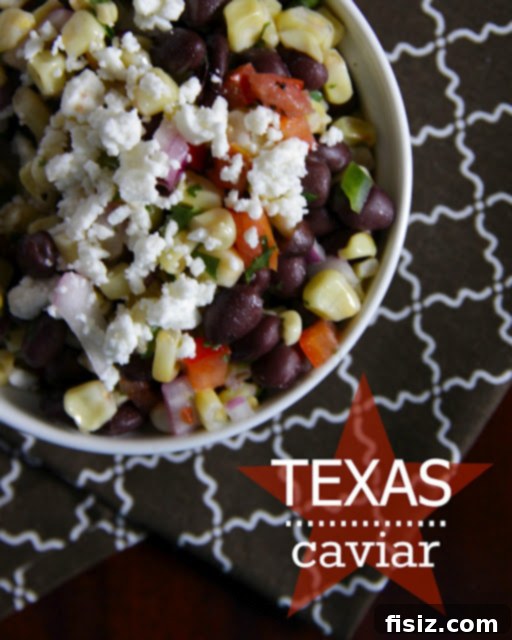
Traditionally, Texas Caviar features black-eyed peas as its star ingredient, combined with a colorful medley of fresh vegetables like bell peppers, onions, and corn, all tossed in a zesty vinaigrette dressing. It’s a dish celebrated for its bright flavors, satisfying textures, and incredible versatility. Whether served as a refreshing dip with tortilla chips, a vibrant side dish for grilled meats, or a flavorful topping for tacos and salads, Texas Caviar embodies the spirit of accessible gourmet. It’s affordable, easy to prepare, and packed with nutrients, making it a crowd-pleasing addition to any gathering.
Crafting Your Own Texas Caviar: A Simple and Flavorful Recipe
You can absolutely bet your sweet peach that I made sure my mother-in-law emailed me that recipe before we left Steamboat! As a “Northern girl,” there was no way I was missing out on this delightful Southern secret. While the traditional recipe often calls for black-eyed peas, my ever-so-clever mother-in-law, Susie Grier, put her own spin on it, swapping them for black beans and adding feta cheese to elevate the flavor profile. This simple substitution adds a creamier texture and a tangy kick that truly makes her version stand out. The beauty of Texas Caviar lies in its adaptability; feel free to adjust ingredients to your personal taste or what’s seasonally available.
Susie Grier’s Inspired Texas Caviar Recipe
Yield and Prep Details:
- Yields: Approximately 6 cups
- Prep Time: 30 minutes (active preparation)
- Cook Time: 45 minutes for grilling corn + 4 hours chilling time (essential for flavor development)
Ingredients List:
- 4 tablespoons unsalted butter, divided
- 4 ears of corn on the cob (or about 3 cups fresh or frozen kernels), husked and washed
- 2 (15 oz) cans black beans, thoroughly drained and rinsed
- 1 small tomato, finely diced
- 1/2 jalapeño, deseeded and finely diced (adjust to your spice preference, use a whole one for more heat!)
- 1/2 cup red onion, finely diced
- 1/2 red bell pepper, finely diced
- 1/4 cup red wine vinegar
- 1/4 cup extra virgin olive oil
- Salt and freshly ground black pepper, to taste
- Feta cheese crumbles, for garnish or mixed in (about 1/2 cup, optional but highly recommended for a tangy twist)
- Fresh cilantro, chopped (optional, for garnish and added freshness)
Step-by-Step Instructions:
- Prepare the Corn: Preheat your grill to medium-high heat. Take 1 tablespoon of unsalted butter and rub it evenly over one ear of corn. Repeat this process for the remaining three ears of corn.
- Grill the Corn to Perfection: Place the buttered corn on the hot grill. Grill for approximately 45 minutes, rotating the ears every 10-15 minutes to ensure even cooking and a beautiful char on all sides. This slow grilling process allows the corn to caramelize, intensifying its natural sweetness and adding a smoky depth of flavor that canned corn simply can’t replicate. Once grilled, remove the corn from the heat and allow it to cool slightly.
- Remove Kernels: Once the corn is cool enough to handle, carefully stand each ear upright in a large bowl. Using a sharp knife, slice downwards to remove the kernels from the cob. Collect all the kernels in the bowl.
- Combine the Vegetables: To the bowl with the corn kernels, add the drained and rinsed black beans, diced tomato, finely diced jalapeño, diced red onion, and diced red bell pepper.
- Prepare the Dressing: In a separate small bowl or a measuring cup, whisk together the red wine vinegar and olive oil until well combined. This simple vinaigrette will provide the essential tang and moisture for the “caviar.”
- Dress and Season: Pour the prepared vinaigrette mixture over the combined vegetables in the large bowl. Toss everything gently but thoroughly to ensure all ingredients are evenly coated. Season generously with salt and freshly ground black pepper, adjusting to your taste.
- Add Feta (Optional): If desired, fold in about 1/2 cup of feta cheese crumbles directly into the mixture, or reserve it to garnish individual servings. The feta adds a delightful salty and creamy counterpoint to the fresh vegetables.
- Chill for Flavor Infusion: This step is crucial! Cover the bowl with plastic wrap and refrigerate the Texas Caviar for at least 4 hours. Ideally, let it chill overnight. This extended chilling time allows the flavors to meld and deepen, transforming a simple mix of ingredients into a complex and harmonious dish.
- Serve and Enjoy: Once thoroughly chilled, give the Texas Caviar a final stir. Serve it proudly with your favorite tortilla chips, crackers, or as a vibrant side dish. For an authentic experience, open a bottle of Shiner Bock, put on your cowboy boots, and enjoy a taste of true Southern comfort!
Serving Suggestions and Perfect Pairings
The beauty of Texas Caviar lies in its incredible versatility. While it shines brightly as a dip, particularly with sturdy tortilla chips, its applications extend far beyond the appetizer table. Imagine it as a colorful and flavorful side dish alongside grilled chicken, fish, or steaks, adding a fresh counterpoint to rich main courses. For a light and satisfying meal, spoon it over a bed of crisp lettuce for a vibrant salad, or use it as a robust topping for tacos, nachos, or quesadillas.
Hosting a barbecue or a casual get-together? Texas Caviar is an absolute showstopper. Its vibrant colors and refreshing taste make it an instant crowd-pleaser, perfect for potlucks and picnics. For beverage pairings, embrace its Southern roots with a crisp, cold lager like Shiner Bock, as suggested by Susie Grier. Sweet iced tea is another classic accompaniment, offering a refreshing contrast to the zesty flavors. For something with a bit more kick, a zesty margarita or a light white wine like Sauvignon Blanc would also complement its bright profile beautifully.
Variations to Explore:
- Protein Boost: Add grilled chicken, shrimp, or crumbled chorizo for a heartier meal.
- Spice it Up: Include a pinch of cayenne pepper, a dash of hot sauce, or swap jalapeños for serrano peppers for extra heat.
- Herbaceous Notes: Experiment with fresh parsley or chives alongside the cilantro for varied aromatics.
- Citrus Zing: A squeeze of fresh lime juice can brighten the dressing even further.
- Avocado Creaminess: Diced avocado added just before serving provides a rich, creamy texture and healthy fats.
Why Texas Caviar Deserves a Spot on Your Table
Texas Caviar offers a compelling package: it’s incredibly affordable, bursting with fresh flavors, and remarkably versatile. It’s a healthy dip, packed with fiber from the beans and corn, and vitamins from the colorful array of vegetables. As a gluten-free and often vegetarian option (depending on additional ingredients), it caters to various dietary preferences, making it an inclusive choice for any gathering. Its ease of preparation means you can whip up a large batch for entertaining without spending hours in the kitchen, allowing you more time to enjoy your guests.
Ultimately, Texas Caviar stands as a delightful counter-narrative to the traditional “caviar dream.” It proves that a culinary experience can be rich, satisfying, and memorable without costing a fortune or being shrouded in exclusivity. It’s a dish that brings people together, sparking conversations and smiles, much like any true delicacy should. So, if you’re looking to elevate your appetizer game or simply craving a taste of vibrant, wholesome goodness, this recipe is your golden ticket.
So, forget the tuxedos and yachts for a moment. With a bowl of homemade Texas Caviar and a cold drink in hand, you’ll discover that some of the most fulfilling “caviar dreams” are found not in extravagance, but in the simple, fresh, and deeply satisfying flavors of accessible culinary treasures. It’s time to trade those “Champagne wishes” for “cold draft wishes” and embrace the delicious reality of “Texas Caviar dreams.”