
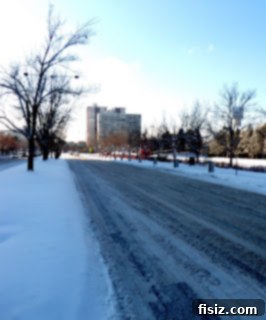
The world outside my window transformed into a hushed, ethereal landscape yesterday, as snow fell relentlessly throughout the day and deep into the night. It wasn’t the kind of monumental blizzard that brings entire cities to a standstill, tearing through infrastructure and demanding emergency declarations. Instead, it was a gentle, persistent snowfall, creating a pristine white blanket over everything. Yet, despite its seemingly benign nature, this accumulation was more than sufficient to introduce a significant, if not entirely unexpected, element of sluggishness to this morning’s commute. The pristine beauty of freshly fallen snow often belies the very real challenges it presents to urban living, particularly when it comes to navigating the early morning rush. The city collectively seemed to sigh under its weight, gears grinding a little slower, movements a little more deliberate, as millions began their daily trek, each anticipating the inevitable delays that come with winter’s gentle embrace. This subtle yet impactful change sets the tone for a slower, more contemplative start to the day, forcing a shift in expectations for anyone venturing out.
And so, as the winter months descend upon us, I find myself embracing the great misfortune pleasure of relying on public transit to navigate my daily journey to work. While many might view the bus as a last resort, a concession to unfavorable conditions, I’ve come to appreciate its unique rhythm and advantages, especially when the weather turns inclement. There’s a certain liberation in relinquishing the stresses of driving on slick, snow-covered roads, handing over the reins to a professional driver. It transforms my commute from a battle against the elements and fellow motorists into an unexpected period of reflection, observation, or even productivity. Instead of gripping the steering wheel in a white-knuckled embrace, I can unwind, catch up on reading, or simply watch the frosted world drift by. This seasonal shift in my commuting habits becomes less of a burden and more of a welcome respite, a small, conscious decision to mitigate the daily grind of urban travel when winter truly sets in. It’s a quiet rebellion against the chaos, a choice for calm amidst the storm, making my journey surprisingly more enjoyable than one might initially imagine.
The logistical dance of vehicle sharing is a reality for Mr. B and me, a direct consequence of our urban dwelling choices. Living in a vibrant city loft, with all its inherent charm and convenience, often comes with certain trade-offs, and in our case, that means being deeded precisely one parking spot within our building. This limitation necessitates a carefully orchestrated strategy for managing our household’s primary mode of transportation: the trusty Jeep. During the sun-drenched summer months, the arrangement is simple and enjoyable. I take the reins of the Jeep for my daily commute, relishing the freedom it offers, while Mr. B, with a clear passion for the open road, opts for his motorcycle, zipping through traffic with enviable agility. However, as soon as the first snowflakes begin to fall and the mercury drops, signaling the arrival of winter, our commuting roles elegantly reverse. The motorcycle is garaged, deemed unsuitable for icy conditions, and Mr. B becomes the primary driver of the Jeep, needing its robust four-wheel drive for his own journey. This leaves me to embrace the warmth and reliability of the public bus system. It’s a system that, for the most part, works out seamlessly, a testament to our cooperative spirit and careful planning. Yet, on particularly chilly mornings or when faced with unexpected delays, a whimsical thought often crosses my mind: perhaps a personal driver, chauffeuring me comfortably through the winter landscape, wouldn’t be an entirely outlandish request for Christmas this year. Is it too much to dream of such effortless luxury? Perhaps, but a girl can certainly hope for a touch of seasonal pampering.
Regardless of my personal commuting philosophy, this morning’s journey to the bus station was approached with a healthy dose of realism. I arrived fully prepared, in fact, expecting delays. The operative word here is undoubtedly: expecting. It wasn’t a matter of if, but merely how long. So, when the electronic signboard flashed an update indicating my usual bus was already delayed by a full forty-five minutes, it didn’t register as a major crisis. It was simply par for the course, an accepted truth of winter travel. What truly caught my attention, however, wasn’t the delay itself, but the palpable shift in atmosphere among my fellow commuters. It was as if the slight inconvenience had triggered a collective meltdown. Whether it was the snow-induced frustration or simply a display of fundamental impatience, people were, quite frankly, freaking out. The scene was a microcosm of urban anxiety: individuals pacing agitatedly back and forth, their heavy breathing audible above the low hum of the station, muffled curses escaping their lips like steam on a cold morning. One particular gentleman became the focal point of this collective angst, repeatedly approaching the ticket office every five minutes with a relentless query. He’d lean in conspiratorially, yet loudly, to the lady behind the reinforced glass, demanding, “Do you know when the bus is coming?” Her responses, delivered with the practiced calm of someone who has heard it all before, were consistently unwavering. “No,” she would patiently reply, her voice even, “I have no control over the bus arrivals, and it’s not my job to keep track. Patience is a virtue, sir.” Observing his escalating agitation, I was quite sure this poor man must have had about twelve canaries before he eventually managed to board a bus, his stress levels visibly soaring with each passing minute.
To be entirely honest, observing the spectacle of such widespread exasperation, I found it increasingly difficult to suppress my amusement. Their reactions, while perhaps understandable on a primal level, seemed utterly ridiculous given the context. It highlighted a disconnect between expectation and reality that I couldn’t help but inwardly critique, even while chuckling. My perspective, honed by years of living in a winter city, offered several salient points that seemed to be entirely lost on the agitated crowd.
Firstly, the most glaring reality: you reside in Denver. And for those unfamiliar with our geographical coordinates, guess what? It snows here. Frequently. Predictably. To express shock or outrage at the sight of snow disrupting daily life in a city renowned for its winter sports and often blanketed in white for months on end strikes me as an almost willful ignorance. This isn’t a freak occurrence; it’s an intrinsic part of our seasonal rhythm, a beautiful, if occasionally inconvenient, aspect of choosing to live in this particular environment. Adapting to snowy conditions is not merely an option, but a fundamental requirement for mental peace during the colder half of the year.
Secondly, a universal truth about public transportation, particularly in inclement weather conditions, is that delays are not just a possibility, but an absolute certainty. Whether it’s snow, ice, heavy rain, or even just dense fog, any form of public transit—be it buses, trains, or trams—will invariably operate on a modified, slower schedule to ensure passenger safety and operational integrity. Expecting punctuality in a snowstorm is akin to expecting sunshine in Seattle in November; it’s a hope against all meteorological odds. Smart commuters factor in these inevitable delays, granting themselves a buffer of time and adjusting their mental clocks accordingly, understanding that safety trumps strict adherence to a timetable.
Thirdly, and perhaps a lesson in basic human interaction: expressing your frustrations, loudly or otherwise, to frontline union workers at the ticket office or behind the wheel of a bus, is a futile exercise. These individuals, bound by their roles and often operating under rigid protocols, typically have no direct control over systemic delays caused by weather or operational issues. Furthermore, their job descriptions do not include absorbing your personal stress or catering to individual demands. Yelling at them accomplishes nothing constructive; it merely escalates tension and leaves both parties feeling worse. A polite inquiry might yield some information, but an aggressive outburst will almost certainly be met with indifference, if not outright disdain, further reinforcing the idea that your problems are, quite simply, not their concern.
Finally, and perhaps most profoundly: why, I found myself wondering, are so many people in such an unyielding hurry to get to work? While professional responsibilities are indeed important, the intensity of their agitation seemed disproportionate to the potential consequences of a minor delay. In the grand scheme of things, being a few minutes late due to unforeseen weather is rarely catastrophic. Employers, particularly in a city accustomed to winter, are generally understanding and accommodating when faced with genuine weather-related travel disruptions. My own experience today confirmed this; I was indeed ten minutes late, a minuscule deviation in a workday, but my boss completely understood, accepting the explanation without a second thought. This entire scenario served as a powerful reminder that people, myself included, often need to seriously chill out. The frantic pace of modern life often compels us to prioritize rigid schedules over personal well-being and a calm disposition. Today, for once, despite the snow and the delays, I felt a remarkable absence of the infamous “Case of The Mondays.” Instead, I experienced a quiet triumph of perspective, a gentle reminder that some things are simply beyond our control, and embracing patience is often the most productive, and certainly the most peaceful, path forward.